
Exploring “9 Moons”: A Groundbreaking Comedy on Trans Masculinity
A Unique Perspective on Gestation
“9 Moons,” directed by Patricia Ortega, breaks new ground by addressing the experience of trans men who can gestate. This film marks a significant shift in Spanish cinema, highlighting narratives that often remain in the shadows. With a feel-good comedic tone, it engages with deeper themes of identity, masculinity, and societal norms.
The Journey of Ángel
The film follows Ángel, a personal trainer who discovers he’s pregnant after a hospital visit. This unexpected revelation propels him to confront a poignant question: should he continue with the pregnancy? Ángel’s journey is not just about the physical implications of gestation but also about exploring his identity as a trans man at a significant juncture in his transition.
Breaking Taboos: A Comedy with Heart
Humor Meets Serious Issues
Ortega’s storytelling combines warmth and humor, making complex issues more approachable. It challenges the traditionally binary view of gender and gestation, highlighting that not all who conceive identify as women. This premise has sparked conversations, drawing both support and criticism from different sectors, particularly within more conservative feminist groups.
The Characters and Their Dynamics
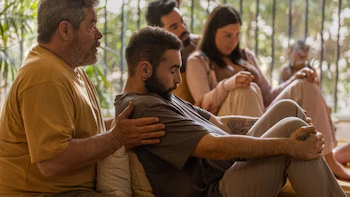
The film features a compelling ensemble cast led by Zack Gomez-Rolls, alongside strong performances from María León, Jorge Sanz, and Kiti Mánver. Each character contributes to portraying a family unit that embraces Ángel without judgment, providing him with the support needed in such a transformative period.
Unpacking Masculinity and Societal Expectations
Identity and Acceptance
Ángel’s conflict extends beyond pregnancy to a profound examination of masculinity. The film captures his struggle against societal pressures to conform to cisgender norms. In doing so, “9 Moons” highlights the inaccuracies inherent in a strictly binary understanding of gender.
Empathy in Relationships
The portrayal of Ángel’s relationship with his family is central to the film’s message. Instead of creating a storyline filled with conflict and judgment, Ortega presents a safe space where Ángel can express his thoughts and feelings openly, fostering empathy and understanding.
Artistic Choices and Symbolism
Visual Storytelling
The film employs distinct visual techniques that echo its themes. Vertical lines and gridded spaces represent the pressure Ángel feels to meet societal expectations, while vibrant colors and chaotic family moments symbolize love and solidarity. These artistic choices enhance the narrative and underscore its political significance.
Conclusion
“9 Moons” stands out not only for its comedic elements but also for its commitment to breaking taboos surrounding gender, identity, and family. By presenting a nuanced portrayal of a trans man’s experience with gestation, it opens doors to much-needed dialogue and understanding. Through humor and warmth, Ortega’s film invites audiences to reflect on complex issues of identity, ultimately advocating for acceptance and visibility in a world that often overlooks them.