
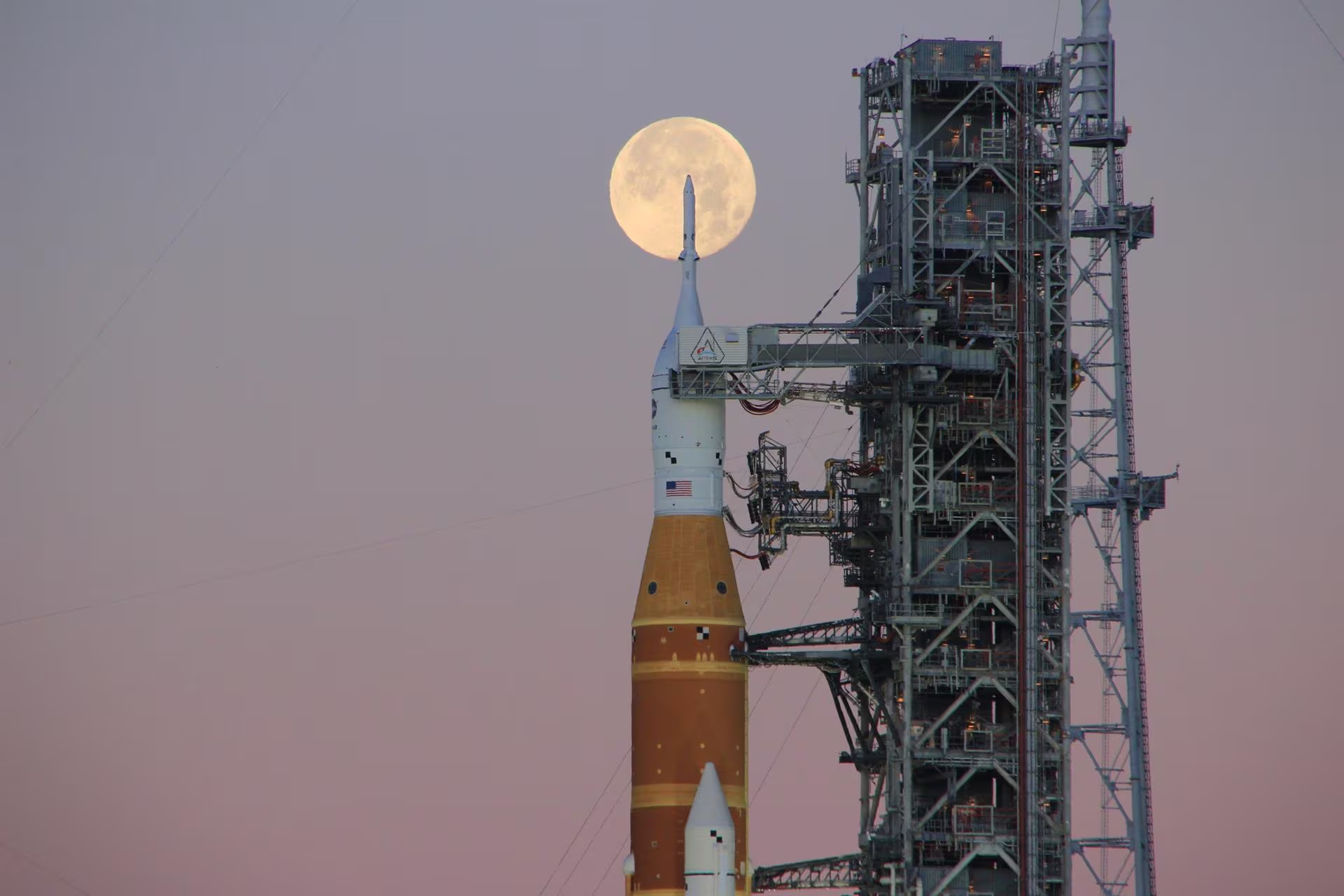
Artemis II Mission Overview
The Artemis II mission has officially launched, marking a significant milestone in NASA’s journey back to the Moon. The Orion capsule, propelled by the Space Launch System (SLS) rocket, is now in space. Key components of this mission, such as the main engines and the interim cryogenic propulsion stage (ICPS), have successfully detached from the rocket, showcasing a well-executed launch sequence.
Current Status of the Orion Capsule
Approximately 10 minutes into the mission, the astronauts aboard the Orion capsule initiated the engines to elevate the perigee. The perigee, defined as the lowest point in a spacecraft’s orbit, is set to reach a safe altitude of 160 kilometers above Earth. This elevation is crucial for ensuring the mission’s safety and efficiency as the spacecraft transitions into higher altitudes.
Next Steps: Transition to High Earth Orbit
After reaching the targeted perigee, the ICPS will reignite approximately an hour later. This pivotal maneuver will enable Orion to ascend into high Earth orbit, setting the stage for the mission’s objectives. As a part of this transition, the crew will have an invaluable window of approximately 23 hours to conduct comprehensive system checks within the capsule.
Importance of System Checks
During this critical time, the astronauts will meticulously assess the functionality of the Orion capsule’s systems. This period is particularly important due to the proximity to Earth, allowing for immediate troubleshooting if any anomalies arise. The systems checks will ensure that the spacecraft is fully operational and ready for its upcoming journey to the Moon.
Goals of the Artemis II Mission
The Artemis II mission aims to pave the way for human exploration of the lunar surface. By affirming the performance and reliability of the Orion capsule and the SLS rocket, NASA is one step closer to achieving its goal of establishing a sustainable human presence on the Moon. This mission will help validate systems and technologies that will be crucial for future explorations, including manned missions to Mars.
Conclusion: A Historic Step Forward
The successful launch of the Artemis II mission represents a monumental achievement in space exploration. As the astronauts orbit Earth, their preparations and checks within the Orion capsule underscore the meticulous planning and engineering that makes space travel possible. This mission is more than just a test; it is a pioneering endeavor that seeks to inspire future generations about the potential of space exploration and our place within the cosmos.
The Artemis II mission sets the stage for a new era in human spaceflight, eagerly awaited by scientists, engineers, and space enthusiasts around the world. The journey to the Moon and beyond is well underway, with each milestone serving as a testament to human ingenuity and determination.