
Understanding Music’s Role in Anxiety Reduction
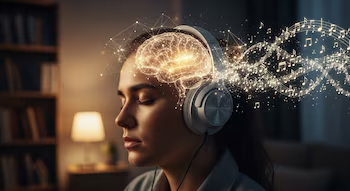
Music therapy has long been recognized for its mental health benefits, particularly in addressing anxiety and emotional regulation. A recent study conducted by the Metropolitan University of Toronto has confirmed that listening to music can significantly help in alleviating anxiety symptoms, pinpointing a duration that optimally impacts anxiety levels.
Key Findings from the Study
The study revealed that a listening duration of twenty-four minutes is the ideal “sweet spot” for reducing anxiety, particularly when combined with a specific type of auditory stimulation. This innovative auditory approach not only lessens anxiety but could potentially serve as a low-cost alternative to traditional treatments for millions of people affected by anxiety worldwide.
The Research Design
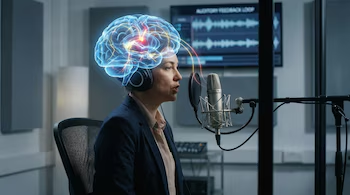
The study evaluated 144 adults with moderate anxiety, who were already on pharmacological treatment. Participants were divided into four groups, each exposed to different sound treatments:
- Pink noise for 24 minutes (control group).
- Music with auditory beat stimulation (ABS) for 12 minutes.
- Music with ABS for 24 minutes.
- Music with ABS for 36 minutes.
Before and after the sessions, participants completed questionnaires measuring anxiety and mood. The findings showed that the twenty-four-minute duration was more effective than the twelve-minute option and comparable to the thirty-six-minute option, indicating a clear dose-response relationship.
Implications for Anxiety Treatment
“What we are seeing is a dose-response pattern, where about 24 minutes of music with ABS seems to be the sweet spot,” explained Frank Russo, a co-author of the study. This approach provides a simple auditory intervention that could serve as an effective tool, especially for those who cannot access conventional therapies.
The study emphasizes the need for more sensory-based options in mental health care, presenting music therapy combined with ABS as an adjunct to traditional treatment methods. This could enhance anecdotal evidence supporting music’s therapeutic potential for anxiety management.