
Artemis II: A Leap in Space Comfort
If all goes well, Artemis II could be launched on April 1 towards the Moon. This mission marks the first time a manned spacecraft will travel to our lunar satellite in over 50 years. While there won’t be a landing this time, the capsule carrying four astronauts will make a lunar flyby, highlighting a 10-day space journey. During this period, the crew will naturally need to manage personal hygiene. So, how do astronauts go to the bathroom in space? Thankfully, the Orion capsule offers comforts that were absent in the Apollo program—most notably, a proper toilet.
The Complicated Bathroom Experience on Apollo Missions
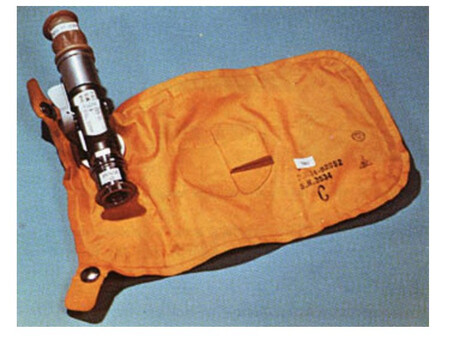
From Apollo 10 in 1969 to Apollo 17 in 1972, 12 astronauts journeyed to the Moon with little more than a few wet wipes for hygiene. For urination, they relied on makeshift devices, akin to condoms, that required daily changes. When it came time to defecate, astronauts had to use a rudimentary bag connected by a hose—a system fraught with inefficiency and leaks. There was no consideration for female anatomy, as all mission crew members were men.
The Unpleasant Reality of Apollo Toiletry
For feces disposal, a bag that adhered to the body served a similar purpose to a diaper, complete with a unique compartment for toilet paper. This system had its own set of challenges, often resulting in awkward moments; an Apollo 10 astronaut once requested a napkin to clean up a floating fecal fragment in the cabin. Astronauts lacked any semblance of privacy while managing these tasks, making the entire experience far from pleasant.
Moreover, the smell must have been incredibly overwhelming, adding another layer of discomfort to an already challenging situation in microgravity.
Challenges of Hygiene in Space
Going to the bathroom in space involves complex issues. Microgravity creates difficulties in managing bodily waste—what should naturally fall tends to float. Additionally, transporting ample water for hygiene complicates things further; excess weight from water would strain spacecraft capacities. Because of microgravity, water also tends to float freely, risking damage to equipment inside a small capsule like Orion.
The Advanced Toilet in Artemis II
Unlike its predecessors, Artemis II’s Orion capsule features a state-of-the-art toilet system. Astronauts will use liquid soap and leave-in shampoo, employing minimal amounts of water that can be quickly dried with towels. The toilet system draws inspiration from what is utilized in the International Space Station (ISS).
This system consists of a container with a hose leading to a funnel, where urine descends via an air suction mechanism. Each astronaut has a designated hose, accommodating both male and female anatomies as necessary, given the crew composition of three men and one woman.
What Happens to Waste?
Once collected, urine is released into space, while feces are vacuumed and sealed in bags that will return to Earth. The existing system is designed for privacy so that astronauts can relieve themselves independently. For added comfort, there is a curtain for extra space and a door in the floor of the capsule, providing the much-needed privacy that Apollo astronauts lacked.
With these advancements, Artemis II stands to revolutionize not just our journey to the Moon, but also everyday astronaut experiences—transforming what was once a less than ideal scenario into a more comfortable and dignified affair.
Image | NASA
In Xataka | Artemis II will take NASA to the Moon half a century later with the assistance of the University of Seville.