
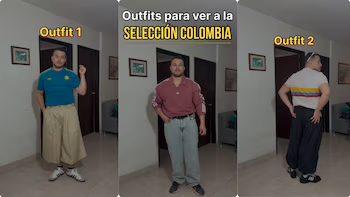
Content Creator Criticized for Colombian National Team Shirt Outfits
The recent video by Romario Reyes, a content creator known on social media as @llamameromario, has sparked considerable criticism after he showcased outfits inspired by the Colombian National Team shirts beyond their traditional sporting context.
Outfit Combinations Stir Controversy
In his video, Romario presented four distinct outfit combinations featuring Colombia’s national team jerseys as a nod to the excitement surrounding upcoming friendly matches and the World Cup. Each outfit aimed to reimagine how these iconic shirts could be integrated into everyday fashion rather than just during matches.
The first look included a blue original Colombia t-shirt paired with wide-boot culottes, while another outfit combined a white “100 Years Edition” t-shirt—featuring the flag across the chest—with wide black pants. He also opted for a light yellow retro t-shirt with denim shorts and high-top sneakers, culminating in a red t-shirt with yellow and blue stripes, white pants, and black shoes.
While the video had the potential to highlight creative styling, it instead drew focus to what many perceived as a disrespectful approach to the national jersey.
Public Reaction and the Debate on Masculinity
The backlash was swift, as many viewers expressed their disapproval. Comments ranged from outright criticism to sarcastic remarks, such as “That’s why they lost” and “Each one worse than the previous Colombia.” Critics claimed that Romario’s approach lacked respect for the national symbol, while others expressed their concerns about the wider implications of the trend, honing in on traditional gender stereotypes.
Supporters of Romario defended him, suggesting that the negative reactions stemmed from discriminatory attitudes and so-called “fragile masculinity.” One user articulated a hypothetical, stating that if a slimmer influencer had made similar fashion choices, the feedback would likely have been very different, pointing to underlying biases in societal reactions toward weight and appearance.
Fragile Masculinity in Football Fashion
The discourse surrounding Romario’s video reignited discussions about fragile masculinity in football culture. This concept addresses how rigid gender roles often limit men in expressing their identities through fashion. Deviations from traditional masculine styles are frequently met with derision. This starkly contrasts with the evolving fashion landscape of contemporary footballers, many of whom now embrace colorful attire and accessories.
The comment section on Romario’s post also revived memories of past controversies regarding the Colombian jersey, drawing parallels to other instances of “misuse” of the shirt, further emphasizing the strong emotional connection fans have to national sports symbols.
Understanding the ‘Blokecore’ Trend
Interestingly, the debate comes at a time when the blokecore trend is gaining traction in urban fashion, merging 80s and 90s football culture with everyday wear. The style typically features retro football jerseys matched with casual urban attire, promoting a comfortable, laid-back look.
Blokecore promotes wearing football jerseys beyond just sporting contexts, often paired with items like baggy jeans and sneakers or even more sophisticated combinations involving blazers and loafers.
However, the trend is not without its critics; some accuse it of cultural appropriation, arguing that these styles have origins in working-class neighborhoods. As Romario’s video illustrates, this debate extends beyond mere aesthetics—raising questions about identity, respect for national symbols, and the limits of creative expression in fashion.
In conclusion, Romario’s attempt to broaden the usage of Colombia’s national shirts into everyday fashion has highlighted the tension between individual expression and cultural respect. This discussion ultimately enriches the dialogue on masculinity and style in contemporary life, suggesting that the conversation around attire is deeper than mere clothing choices.