
China’s Revolutionary Low-Temperature Alloy: A Game Changer for Refrigeration
Helium, widely known for its role in filling balloons, has critical applications in refrigeration for high-tech industries, including magnetic resonance imaging and quantum computing. However, helium-3, the isotope particularly prized for cooling needs in advanced physics, is becoming increasingly scarce. As research progresses, a Chinese research team’s recent breakthrough offers a compelling solution.
The Groundbreaking Alloy
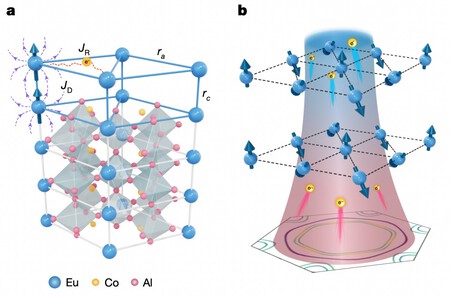
This innovative alloy, named EuCo₂Al₉ (ECA), is capable of achieving unprecedented temperatures of 106 millikelvin (–273.05 °C), marking the lowest temperature recorded for a metallic magnetocaloric material without helium-3. This achievement not only highlights the alloy’s potential as a powerful refrigerant but also unveils unique properties that could redefine thermal management in various industries.
Exceptional Properties
One of ECA’s most remarkable characteristics is its dual functionality; it acts as a superior heat absorber while maintaining thermal conductivity 50 to 100 times greater than conventional materials. This combination positions ECA as a potential candidate for next-generation cooling systems, effectively addressing the limitations posed by traditional helium-based methods.
The Strategic Importance of ECA
With the majority of helium-3 sourced from the United States and Russia, China’s groundbreaking invention propels it closer to self-sufficiency in a critical resource that has significant implications for national security and technological advancements. Currently, China imports approximately 95% of its helium-3, making this invention a strategic asset.
U.S. Interest and Implications
The United States has also expressed keen interest in this discovery. The Defense Advanced Research Projects Agency (DARPA) recently initiated research into modular helium-3-free cooling systems, but within weeks, the solution emerged from China. This timely development underscores the competitive landscape surrounding next-generation research technologies.
Technological Context
Many current quantum computing systems depend on dilution refrigeration, which operates below 1 Kelvin. These systems are cumbersome and expensive, limiting scalability. ECA’s cooling capability, based on adiabatic demagnetization, offers a promising alternative that could make quantum technology more accessible.
How It Works
ECA’s cooling technology employs a magnetic field to align the internal spins of the material, releasing heat. When the magnetic field is removed, the material absorbs heat from the surroundings, effectively cooling down further. This innovative mechanism offers substantial advantages over existing cooling technologies.
Challenges Ahead
Even though reaching temperatures of 106 mK is impressive, it still falls short compared to advanced dilution systems, which can attain temperatures as low as 10 mK. Moreover, transitioning ECA from laboratory settings to industrial applications involves complexities related to scalability and cost, especially since ECA incorporates Europium, a rare earth element that complicates production.
Conclusion
The advent of China’s EuCo₂Al₉ is not just a remarkable scientific achievement; it is a pivotal moment that could reshape the technological landscape. As the world becomes increasingly reliant on advanced cooling solutions, this alloy positions China as a formidable player on the global stage, challenging the traditional dominance held by the United States. The implications for the future of quantum computing and various other high-tech industries are profound.
With this development, it is clear that the race for cutting-edge technologies will only intensify, making innovation in materials science a critical focal point in maintaining global competitiveness and technological leadership.