

Everyone does what they want at home, but certain habits can be more beneficial than others. One custom that often ignites debates is the practice of taking off your shoes when entering the house. This habit varies significantly around the world, and while some cultures embrace it wholeheartedly, others view it quite differently.
Global Perspectives on Shoe Removal
The tradition of removing shoes is prominently associated with Japan, where it encapsulates a broader cultural context. However, this practice isn’t confined to Japan alone. According to a map from Wikimedia, many regions, especially across Asia, North Africa, and Canada, also observe this custom.

The latest Wikimedia map on Which countries take off their shoes at home and which don’t
The Genkan: A Cultural Space
In Japan, the entrance area called the genkan is specifically designed for shoe removal, delineating the boundary between the “outer world” (often dirty) and the “inner world” (clean). This cultural protocol establishes a clear boundary that resonates with many Asian cultures and even some Nordic countries, where practicality and cleanliness are paramount.
Religious Influences
In many Middle Eastern countries, religious teachings have shaped the custom of removing shoes. Notably, the Quran contains verses emphasizing the sacred nature of certain places, advising followers to remove their footwear in holiness. Such customs often reflect deeper religious and cultural values intertwined with behavioral norms.
The Debate: To Shoes or Not to Shoes?
As norms evolve, the debate surrounding shoe removal takes new dimensions. In countries where this custom traditionally thrived, like in much of Asia, refusing to take off shoes can be perceived as disrespectful. In contrast, nations such as Spain, France, and Italy uphold the opposite view, with many people comfortable wearing shoes indoors.
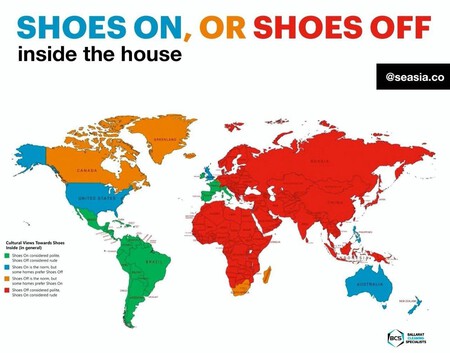
The world map of the tradition of taking off shoes at home. Seasia.co
Recent discussions, particularly infectious disease concerns post-COVID-19, have prompted many to reassess their stance on shoe removal. In the UK, for example, there has been a subtle shift towards adopting this hygiene-focused practice, leading to diverse perspectives even within a single country.
Health Perspectives
From a health perspective, studies suggest that removing shoes indoors can significantly improve hygiene. A study from Macquarie University highlights that about 60% of household dust originates externally, primarily traveling in on shoes. Moreover, statistics show that a staggering 99% of shoes tested carry traces of harmful bacteria, including E. coli and chemicals like lead.
As microbiologist Jonathan Sexton points out, wearing outdoor shoes indoors contributes to a range of pollutants entering our living spaces, complicating efforts to maintain a clean environment.
Conclusion
Ultimately, whether to wear shoes or not indoors is a deeply personal choice. While many cultures emphasize the significance of cleanliness by advocating for shoe removal, others are still comfortable with shoes indoors. Regardless of your stance, it’s worth considering the benefits of prevention over cleaning. After all, prevention is better than cure.