
The Challenge of Sleeping in Economy Class
Traveling in economy class on a long-haul flight often translates to unsatisfactory sleep, if any at all. Many of us can relate to the challenges posed by narrow seats, limited legroom, and an overall posture that does little to encourage rest. This discomfort is more than a minor inconvenience; it significantly affects the flying experience. However, some airlines are starting to innovate and tackle this pressing issue directly within their economy cabins.
Contrasting Luxury Experiences
On the other end of the spectrum, we frequently encounter luxury-focused advertising campaigns that promise unparalleled comfort. A prime example is Emirates’ advertisement featuring Jennifer Aniston, showcasing the transition from a basic cabin to a lavish suite complete with a fully reclined bed. This transformation is not merely cosmetic; it redefines the in-flight experience entirely.
An Attempt to Make Economy Class Comfortable
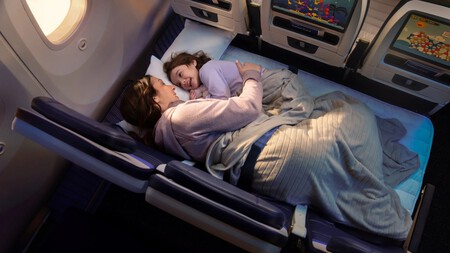
This brings us to recent developments aimed at improving the economy class experience. United Airlines has introduced an initiative called the Relax Row. This innovative seating option allows passengers to adapt a specific row of seats to create more space for stretching out during the flight. Scheduled for rollout in 2027, it will be placed between United Economy and United Premium Plus, with plans to implement it across over 200 Boeing 787 and 777 aircraft by 2030.
However, this concept isn’t entirely new. Air New Zealand’s Skycouch has been offering a similar solution for some time. The Skycouch allows leg rests to be elevated, creating a continuous sleeping surface. While it doesn’t offer the luxury associated with premium classes, it provides more flexibility and comfort than the typical economy seat.
Space and Comfort Redefined
Both the Relax Row and Skycouch innovations primarily aim to expand available sleeping areas for passengers. Air New Zealand’s sleeping area measures approximately 1.55 meters in length and 74 centimeters in width, accompanied by added bedding and secure belts for safety. United, meanwhile, plans to introduce features like adapted mattresses, blankets, and extra pillows to make the sleeping experience more pleasant.
Who Benefits from These Innovations?
Both airline concepts raise questions about who stands to gain the most. United’s promotional materials suggest that solo travelers will benefit significantly from the extra room to stretch out. Couples may find it easier to share the space more flexibly, while families with young children may appreciate the variety of configurations available.
Conditions and Limitations
It’s essential to know that these seating configurations come with caveats. For Air New Zealand, availability varies based on aircraft type and route, and not all configurations will be accessible at all times. Moreover, this option often incurs an additional fee on top of the standard ticket price. United has not yet disclosed details regarding costs but has indicated that the rollout will occur in phases.
The Future of Economy Class Flying
In conclusion, these emerging proposals do not radically change the essence of flying economy class but provide a welcome adjustment. Instead of mimicking luxury suites, the focus is on offering more room to relax within existing constraints. Striking the right balance between cost and comfort will undoubtedly continue to shape developments in this space.