
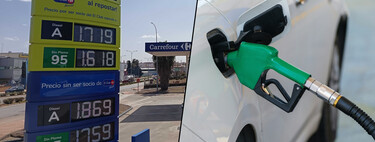
Why Fuel Prices Remain High in the Canary Islands
Last week, the Government introduced an emergency plan aimed at alleviating the financial pressure on citizens due to the rising costs from the ongoing war in the Middle East. One of the main highlights of this plan was the reduction of VAT on fuel from 21% to 10%. For many drivers on the mainland, this change has resulted in approximately 30 cents less per liter of gasoline and around 20 euros in savings per tank.
The Canary Islands’ Unique Tax System
However, residents of the Canary Islands are not experiencing this relief. Unlike the peninsula, where the VAT cut directly impacts consumers at the pump, the Canary Islands operates under a distinct tax framework. The Canary Islands do not pay VAT. The recent VAT adjustment does not affect the archipelago, as the Value Added Tax and the Special Tax on Hydrocarbons do not apply here. Instead, consumers pay the Canary Islands General Indirect Tax (IGIC) along with its own regional tax on petroleum-derived fuels.
Understanding the IGIC
The IGIC functions similarly to VAT but is set at considerably lower rates. The general VAT rate in Spain is 21%, whereas the IGIC is just 7%. For reduced rates, while the VAT drops to 10%, the IGIC only falls to 3%. This discrepancy means that when a driver fills their tank in the Canary Islands, they’re paying less than half in consumption taxes compared to drivers in cities like Madrid or Seville.
Overall, fuel pricing on the islands boasts a tax burden of about 25%, compared to the national average of 50%. This unique tax framework helps counterbalance the additional costs of living in an archipelago, where all energy sources are imported via ship because of the absence of oil pipelines.
The Limitations of Tax Reductions
The existing tax difference imposes constraints on the islands. When the State lowers VAT from 21% to 10%, it cuts by 11 percentage points. To achieve an equivalent reduction in the Canary Islands, the government would need to bring the IGIC down to zero, which is a significant challenge. As such, the impact on consumer expenses remains less pronounced compared to the mainland, where the reduction directly translates to savings at the pump.
Impacts of Rising Oil Prices
Historically, gasoline prices in the Canary Islands were more manageable due to the Economic and Fiscal Regime (REF), which regulates prices and applies the IGIC instead of VAT. However, when oil prices surge, the consequences are felt more acutely in the islands. The transportation of goods, including fuel, primarily occurs by ship, leading to higher prices during crises. According to the Ministry for the Ecological Transition, the average price of a liter of 95 gasoline in the Canary Islands has risen from 1.181 euros to 1.383 euros since the onset of the current conflict.
Future Initiatives
In response to these challenges, the regional government, led by Fernando Clavijo, is developing its own anti-crisis measures. One proposal is to reduce the IGIC rate on fuels to zero, effectively eliminating the current 7%. Additional considerations include a 99.9% exemption from fuel taxes for transporters and adjustments to regional personal income tax deductions. To implement these initiatives without infringing on spending restrictions, the Canary Islands Executive has requested greater flexibility from the Ministry of Finance.