
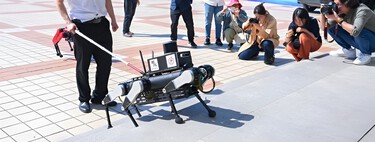
The deployment of data centers to train artificial intelligence represents not just a technological evolution, but also a significant economic shift. This year, major American corporations, including Meta, Amazon, Microsoft, and Google, are set to spend over $670 billion—exceeding NASA’s entire budget for sending humans to the Moon. A notable component of this investment is enhancing security, particularly through the use of robot dogs.
The Rise of AI Data Centers
In today’s AI-driven age, data centers are more than critical infrastructures; they are becoming the epicenters of technological advancement. Companies are signing massive contracts with hardware providers like NVIDIA and AMD to secure the resources necessary for training sophisticated AI models. However, these investments encompass much more than just computational power; they also demand substantial expenditures on infrastructure, power, cooling systems, and staffing.
Security Through Innovation
Both perimeter and internal security are primary concerns for these extensive facilities. According to a report by Business Insider, companies are increasingly allocating funds for robotic patrols—proactive measures designed to identify both security threats and potential equipment failures before they lead to significant issues.
Leading Companies in Robotics
Prominent robotic firms like Boston Dynamics and Ghost Robotics are at the forefront of this movement. Their devices, such as Boston Dynamics’ Spot and Ghost Robotics’ Vision 60, are being implemented in various data centers. Increased interest has been noted in the sector, with Boston Dynamics revealing that they have been actively visiting data centers for potential client engagements.
Roles and Responsibilities of Robot Dogs
Robot dogs are not limited to mere surveillance. They undertake a range of tasks that enhance operational efficiency:
- Patrol external perimeters to check for fence issues or unauthorized access.
- Navigate server rooms to identify equipment anomalies, such as water leaks or temperature irregularities.
- Collect visual data from machinery and systems.
- Map interiors with LiDAR technology to ensure all elements are in their proper locations.
Facilities like Novva Data Centers in Utah and Oracle’s lab in Chicago are already testing these advanced robotic solutions.
Economic Considerations
The financial implications of integrating robot dogs into data center security are significant. While hiring a full-time human guard can cost around $300,000 annually, the initial procurement cost for a Spot robot ranges from $175,000 to $300,000. Moreover, a Vision 60 is priced at approximately $165,000. These robotic solutions offer enhanced capabilities at competitive costs, often providing a return on investment in about 18 months.
Challenges and Infrastructure Requirements
Despite their capabilities, robot dogs are not a catch-all solution. They require regular battery changes and well-planned environments to operate effectively. Factors like LiDAR performance, obstacle navigation, and the placement of static sensors need to be carefully orchestrated to ensure seamless integration.
The Expanding Market
The market for robot dogs in data centers is burgeoning. Currently estimated at around 500,000 units, industry forecasts suggest it could double by 2030, potentially generating a $21 billion market by that time, with projections soaring to $5 trillion by 2050.
Conclusion: The Human Element in a Robotic Future
While robot dogs serve as effective complements to human security staff, the ongoing debates around labor replacement remain pertinent. Executives from robotic firms emphasize that these innovations won’t entirely replace human roles but will enhance operational efficiency. Humans will continue to play an essential role, especially in handling anomalies that require close attention.
In sum, as data centers evolve into smart hubs powered by AI, integrating robotic solutions adds a new layer of security and efficiency. As technology advances, the balance between human oversight and robotic automation will define the future of facilities management.