
Understanding Safety in Aviation Amidst Military Conflicts
Every day, over 100,000 commercial flights traverse the skies. Despite numerous active conflicts globally, aviation remains one of the safest modes of transportation. The odds of experiencing a serious accident are less than one in several millions.
The Question at Hand
The military escalation in the Middle East has sparked concerns among travelers regarding the safety of flights between Europe and Asia. With increasingly crowded skies filled with drones, missiles, and air defenses, many are left questioning whether it is safe to fly.
Applying Ockham’s Razor
Despite the dramatic scenario unfolding, the answer is straightforward, resembling a direct application of Ockham’s razor: if flights remain operational, the direct risks to commercial aircraft are exceedingly low and meticulously managed.
A Complex, Yet Safe Airspace
Redefining Flight Paths
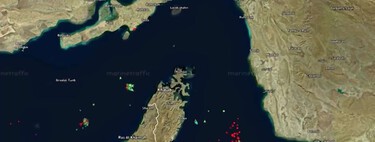
The ongoing war has compelled authorities to restructure flight maps entirely. Large corridors over the Gulf are closed, channeling traffic to longer routes that often weave through regions such as Egypt or the Caucasus. This shift has increased the burden on air traffic controllers and crew members, who now operate under intensified protocols to ensure safety.
The Real Risk
Experts agree that while drone and missile attacks may target ground infrastructure, planes in flight are extremely hard to hit. Their size, speed, and planned routes are designed to avoid direct threats, placing a greater danger on the ground near airports instead of in the air.
Lessons from the Past
Heightened Awareness and Protocols
Previous incidents, such as the shooting down of Flight MH17, have significantly influenced aviation protocols. Today, if there’s any potential for confusion with military activities, airspace is either immediately closed or rerouted. This proactive approach aims to prevent repeating past mistakes.
The Principles of Modern Aviation Safety
Staying Out of Harm’s Way
The distinctive principle that governs commercial aviation is simple: flights do not operate in war zones. Airlines coordinate closely with military authorities, utilizing intelligence systems and risk analysis to determine safe routes continually.
Impacts on Travelers
This rigorous approach means detours, increased fuel consumption, and delays; however, it also ensures that flights remain within “safety bubbles” far removed from active conflict zones. Passengers often face more disruptions than immediate safety concerns, including cancellations, lengthy detours, and heightened fares.
Perception vs. Reality
The Psychological Factor
The psychological impact of witnessing missiles being intercepted or airports experiencing temporary closures can amplify the perception of risk. Yet, the real likelihood of an in-flight incident remains incredibly low. As we navigate this tumultuous period, it’s worth noting that while military activity in the skies may have increased, the layers of prevention and safety measures surrounding civil aviation have also been heightened.
A Clear Conclusion
Ultimately, the answer to travelers’ concerns is straightforward. The intensity of the conflict, the presence of combat drones, or ballistic missiles are secondary concerns. What truly matters is that commercial airplanes simply do not fly where the conflict rages.