
The Internal Crisis of Honduras’ National Electoral Council: A Threat to Electoral Integrity
Overview of the Crisis
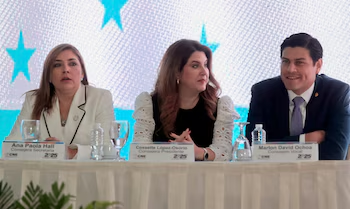
The Honduran National Electoral Council (CNE) is facing significant turmoil as accusations of misconduct and political interference emerge. The council’s advisor, Marlon Ochoa, has accused fellow members of orchestrating a campaign to oust him through a political trial. His claims spotlight deep divisions within the CNE, raising concerns about the integrity and transparency of upcoming elections.
Allegations and Accusations
Ochoa alleges that certain council members are violating the electoral process by manipulating the biometric system and tampering with the source code of electoral results. He demands a meticulous recount before any official declaration of election outcomes. Central to his allegations are Deputies Tomás Zambrano and Jorge Cálix, whom Ochoa claims are trying to silence him to maintain the status quo of alleged electoral fraud—a narrative he has repeatedly shared in local media.
He states, “Honduras does not deserve to live among traps, fraud, and coups,” indicating his commitment to exposing what he terms an “electoral coup” against the populace.
Responses from CNE Colleagues
Ochoa’s claims have been met with rebuttals from other council members. Cossette Lopez characterized Ochoa’s indignation as “false,” arguing that he is defaming others and attempting to paralyze the council’s operations. Lopez also raised concerns about the presence of 123 foreign observers during past elections, alleging they had entered polling places without proper authorization.
In a different perspective, Ana Paola Hall dismissed Ochoa’s actions as obstructive, suggesting that he has blurred the lines between his role as a council member and an activist. This internal strife not only complicates the CNE’s operational capacity but also poses a serious threat to the credibility of its electoral management.
Political Implications
The fallout from this internal conflict has broader political ramifications. Manuel Zelaya Rosales, the general coordinator of the Freedom and Refoundation Party (Libre), supports Ochoa’s complaints. He claims that there is a conspiracy aimed at weakening his party ahead of the 2029 elections, framing the situation as a pivotal moment in Honduran democracy.
Zelaya warns that efforts are underway to remove Ochoa from the CNE during the upcoming Easter holiday, which has implications for political stability and public confidence in the electoral body.
Conclusion: The Challenge Ahead
The ongoing crisis within the CNE serves as a stark reminder of the fragility of electoral integrity in Honduras. As accusations fly and divisions deepen, the potential for manipulation and fraud looms large. The outcomes of this internal conflict will not only define the future of the National Electoral Council but will also shape the public’s trust in the democratic processes of Honduras. It is essential for both national and international observers to monitor this situation closely to ensure that the principles of transparency and democracy are upheld.