
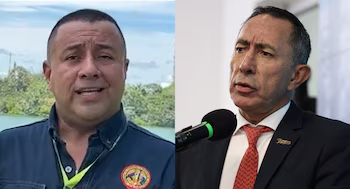
Ecopetrol Workers Demand Resignation of President Amid Allegations
Background on the Situation
The current political landscape at Ecopetrol, Colombia’s largest oil company, is in turmoil as the Workers’ Union (USO) has called for the resignation of President Ricardo Roa. This demand is driven by ongoing investigations into allegations of influence peddling, creating an internal crisis that could severely disrupt the company’s operations.
Union’s Stance and Potential Action
USO President Martín Ravelo has stated that failure to remove Roa could lead to national mobilizations involving approximately 25,000 workers—close to a third of Ecopetrol’s 87,000 employees and contractors. “The Workers’ Union has always prioritized the negotiation mechanism. However, we have not ruled out mobilization as a tool to defend the interests of the workers,” Ravelo asserted in a recent interview.
Administrative Challenges and Government Policy
The situation comes at a critical time for Ecopetrol, coinciding with board deliberations regarding Roa’s continued leadership. The USO’s demand is not solely based on legal concerns; it also highlights disagreements with government policy aimed at reducing support for the oil and gas industry while promoting renewable energy sources.
Ravelo emphasizes the need for Colombia to enhance exploration efforts and considers the development of unconventional resources like hydraulic fracturing (fracking) essential.
Economic Factors Influencing Decisions
Interestingly, the stock market’s reaction to global oil prices adds another layer to this crisis. Recently, Ecopetrol’s stock surpassed $2,800 for the first time since January 2023, largely due to fluctuations in Brent crude oil prices, which have seen a sustained rise. This rising stock value could potentially affect the company’s profitability and influence decisions made by the board.
Reputational Concerns and Future Actions
The USO has raised concerns about the reputational damage that ongoing judicial investigations could inflict on Ecopetrol, particularly as it is listed on stock exchanges in Bogotá and New York. Ravelo emphasized, “We are concerned about the reputational impact on Ecopetrol, and that is why we ask the Board of Directors to remove him and appoint someone focused on business objectives.”
The pressure is mounting for the board to act quickly, as the collective stance of the workers could lead to significant operational disruptions if their demands are ignored.
Conclusion: A Turning Point for Ecopetrol
The unfolding situation at Ecopetrol stands as a critical juncture for the company and its leadership. As the USO mobilizes support among workers, the board’s response to these demands will likely define the future trajectory of both the company and Colombia’s oil sector. The combination of legal challenges, internal strife, and changing market dynamics presents a precarious balance that must be navigated with care to safeguard the future of Ecopetrol.