
Frantic.
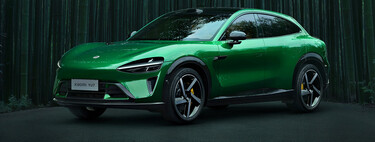
This is how we could define Xiaomi’s calendar in the automobile market. On Thursday, December 28, 2023, Xiaomi unveiled the Xiaomi SU7, its first electric car, with a presentation that left no stone unturned. It was a showcase of engineering and design, with every detail meticulously explained.
Revolutionizing the Automotive Industry
The brand turned the industry upside down. The SU7 is a direct competitor to illustrious models such as the Tesla Model S and Porsche Taycan, promising performance that rivals these benchmarks at a fraction of their cost. This launch signifies a pivotal moment as a “mobile brand” transitions into the automotive realm, wholeheartedly embracing a sector that holds substantial promise.
For those outside of China, the SU7 offers a glimpse into a world that operates at an entirely different speed, one that is increasingly competitive and innovative.
The Boiler of the Chinese Electric Car
If the Chinese electric vehicle market were a boiler, it’s operating at full capacity, ready to explode with the number of new entries. Traditional European automotive companies typically operate on a timeline of two to three years for vehicle development, followed by a lengthy product cycle that can extend to nearly a decade.
However, Chinese manufacturers like Xiaomi are upending these timelines. Just 812 days after the initial SU7’s reveal, Xiaomi has launched a renewed model, demonstrating its ability to iterate rapidly in this fiercely competitive landscape.
Rapid and Frequent Innovations
Xiaomi’s commitment to innovation is evident in its strategy. In five years, the company has not only entered the electric vehicle market but has also launched two different models and a sporty variant of one of them. The recently announced SU7 upgrade carries the mantra of “more and better.”
While external enhancements like a revamped grille and new wheel designs catch the eye, the interior showcases a significant upgrade. The use of softer plastics and revamped seating—complete with standard heating and cooling—highlights Xiaomi’s push for luxury alongside technology.
Performance and Mechanics
The Xiaomi SU7’s performance specs are undeniably impressive. It is now equipped with the HyperEngine V6s Plus engine, achieving an astounding 0 to 100 km/h in just 3.08 seconds, and a top speed of 265 km/h. Battery ranges have also seen significant improvements, achieving:
- 720 kilometers for the standard model
- 902 kilometers for the Pro version
- 835 kilometers for the Max variant
These numbers are based on the Chinese CTLC cycle, which tends to be more optimistic than Europe’s WLTP standards, yet Xiaomi is already promising fast charging capabilities, recovering 670 kilometers in just 15 minutes.
Advanced Features and Ecosystem Integration
Along with mechanical enhancements, the SU7 comes with upgraded software and driving assistance features that promise smoother and safer experiences. The infotainment system, now upgraded to Xiaomi HyperOS, enhances connectivity with other Xiaomi devices, further enriching the user experience.
The Fast-Paced Future of the Automotive Industry
The renewal of the Xiaomi SU7 exemplifies how quickly the electric vehicle industry operates in China. Although the rapid cycle of innovation leads to a fast response to customer needs, it also creates uncertainty. With products evolving so swiftly, customers might find it challenging to keep up, risking stagnation in dealership sales.
In conclusion, Xiaomi is not just another player in the automotive market; it’s a clear illustration of how China is racing ahead while Europe walks. The implications for the global automotive landscape are profound, signaling a shift toward a faster, more agile manufacturing approach that prioritizes speed and consumer needs above all else.