
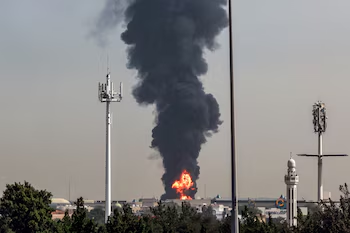
Fire Breaks Out at Shah Oil Field Following Drone Attack in the UAE
Overview of the Incident
A drone attack on March 16, 2026, resulted in a significant fire at the Shah oil field, located around 230 kilometers south of Abu Dhabi. This field is critical for the UAE’s energy supply, with a production capacity of approximately 70,000 barrels per day. Emergency crews are currently working to extinguish the fire.
Context of Rising Tensions
The incident highlights the escalating tensions within the Gulf region, particularly as attacks on key energy infrastructure have escalated. This drone strike comes at a time when military operations and retaliatory actions are intensifying in the area, as highlighted by recent combat activities involving regional powers.
Regional Military Escalations
Israel launched a series of large-scale assaults targeting Iranian cities such as Tehran, Shiraz, and Tabriz, while simultaneously executing limited ground operations against Hezbollah in southern Lebanon. According to the Israeli military, around 70% of Iranian missile launchers and 85% of their air defenses have been neutralized since the beginning of the conflict on February 28.
In response, Iran has escalated its attacks, employing drones and missiles against various Gulf nations. Notably, a drone strike targeted a fuel tank at Dubai International Airport—one of the busiest in the world—forcing the temporary suspension of airport operations. Additionally, a missile in Abu Dhabi killed a Palestinian citizen. Saudi Arabia successfully intercepted over 60 drones within hours as UAE’s air defense systems reacted to multiple Iranian threats.
Diplomatic Frictions and Economic Implications
On the diplomatic front, U.S. President Donald Trump confirmed ongoing discussions with Iran, stating that Tehran is not yet ready to negotiate. He also urged several countries to deploy warships in the Strait of Hormuz, a crucial passage for nearly one-fifth of the world’s oil supply. The conflict’s turmoil has caused oil prices to surge past $104 per barrel, reflecting over a 40% increase since hostilities reignited.
Continued Military Engagement
In the wake of these developments, there are reports of over 200 U.S. soldiers injured across seven Middle Eastern countries since the onset of the conflict with Iran. The U.S. Central Command indicates that most injuries were minor, with a significant number of soldiers returning to active duty.
Furthermore, Israeli air strikes targeted the headquarters of the Iranian Revolutionary Guard’s Navy in Tehran, aimed at disrupting their military infrastructure and preventing naval operations perceived as hostile towards Israel and international navigation.
Conclusion
The attack on the Shah oil field underscores the precarious balance of power in the Middle East, where military engagements have direct consequences on global energy security. This ongoing conflict complicates diplomatic efforts and raises concerns over stability within the region, affecting not just the involved nations but the world economy at large. As military actions intensify, it remains to be seen how each power will adapt and respond to these mounting pressures.