

Meta’s New Alerts: Fighting Scams on Social Media
Social networks and messaging applications are prime hunting grounds for scammers. These platforms foster trust, allowing users to engage with familiar faces, often leading to quick, impulsive decision-making. In this context, even a seemingly benign message, link, or request can be the first step toward falling victim to a scam. To combat this, Meta is rolling out new alerts designed to detect suspicious signals and warn users before it’s too late.
When WhatsApp Links Get Dangerous
One significant development involves a fraud technique where scammers attempt to link a victim’s WhatsApp account to a different device. They may trick users into sharing their phone number or the pairing code displayed in WhatsApp. Some may even request to scan a QR code under false pretenses. With Meta’s new alerts, the application will issue warnings when it detects signs of suspicious activity, allowing users to pause and reconsider their actions before proceeding.
Beware of Suspicious Friend Requests
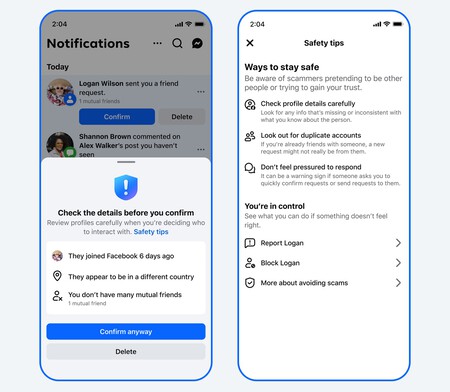
Meta’s alert system is not limited to WhatsApp. On Facebook, users will soon receive warnings when accepting friend requests that exhibit unusual behavior. Signs of suspicious activity include accounts lacking mutual friends or profiles that indicate foreign locations. These alerts aim to give users more context, empowering them to make informed decisions, whether to accept, block, or ignore the request.
Updates in Messenger for Safety
Beyond Facebook, Meta is expanding its scam detection system in Messenger to reach more countries. This feature will focus on the conversations themselves. When a chat displays patterns associated with common scams—like suspicious job offers—the platform will notify users. The system may prompt users to share recent messages, allowing an AI-based tool to analyze this content for potential fraudulent activity.
A Broader Strategy: Beyond Alerts
Meta underscores that these in-app alerts are just a component of their broader strategy against scams. The company is bolstering automatic detection systems powered by artificial intelligence, capable of analyzing various signals including text, images, and contextual information. This will help identify complex scam patterns, such as accounts pretending to be public figures or links leading to counterfeit sites.

Significant Achievements in Scam Prevention
According to Meta’s reports, in 2025, over 159 million scam-related ads were removed globally for violating their policies, with roughly 92% removed before users even reported them. The company also shut down 10.9 million accounts on Facebook and Instagram connected to scam centers, demonstrating the effectiveness of its automatic detection systems.
Meta’s proactive measures illustrate its commitment to creating a safer online environment. As users, remaining vigilant and informed is crucial to navigating these platforms securely.