
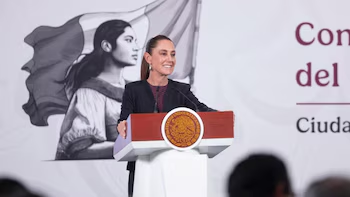
Sheinbaum’s Stand on Electoral Reform
President Claudia Sheinbaum Pardo has made it clear that she will not request the support of her allied parties, PT (Labor Party) and PVEM (Ecologist Green Party of Mexico), for the upcoming electoral reform set to be analyzed in the Chamber of Deputies this week. This decision follows Deputy Ricardo Monreal’s predictions that Morena, the ruling party, may struggle to garner support from both allied parties.
The Public’s Opinion and Legislative Responsibilities
In a recent morning conference, Sheinbaum referenced a survey showing that 80% of respondents are in favor of the proposed electoral reforms. Key components include reducing funding for political parties and ensuring that proportional representation legislators are elected directly by citizens.
She emphasized that with the submission of the reform, she believes she has already met her obligations to the public, stating, “It’s up to everyone to decide.” This suggests that she trusts the deputies to exercise their voting power responsibly based on public sentiment instead of political affiliation.
The Challenges Facing Morena
Deputy Ricardo Monreal, the coordinator of Morena in the Chamber of Deputies, described the discussion and potential approval of the electoral reform as a challenge. He reaffirmed the support of the Morena bench for the initiative, while also noting the likelihood of temporary disagreements with PT and PVEM.
Monreal stated that both parties would have their independent stances, but he remains committed to unity among the coalition ahead of the 2027 elections, recognizing that competing separately complicates the electoral landscape.
Proposed Changes in the Electoral System
The electoral reform aims to modify the constitutional framework to better reflect the popular will, leading to alterations in the composition of the Chamber of Deputies and Senate. It proposes maintaining 500 deputies, albeit with adjustments to proportional representation, and 96 senators.
Essential proposals include:
- Reducing the election costs by 25%.
- Lowering salaries and bonuses for senior officials.
- Avoiding duplication in electoral bodies.
- Limiting the number of municipal councilors.
- Enhancing financial oversight for political parties and candidates.
- Facilitating voting for citizens abroad.
- Reducing electoral campaign airtime and eliminating PREPs (Preliminary Election Results Programs).
- Prohibiting consecutive re-elections starting in 2030.
The Need for Consensus
Given the complexities of coalition politics and the importance of consensus, Monreal has stressed the necessity of collaboration to ensure that these proposed changes are incorporated into the existing Constitution. As the legislative process unfolds, it will be crucial for all involved parties to prioritize the interests of the Mexican populace above political strife.