
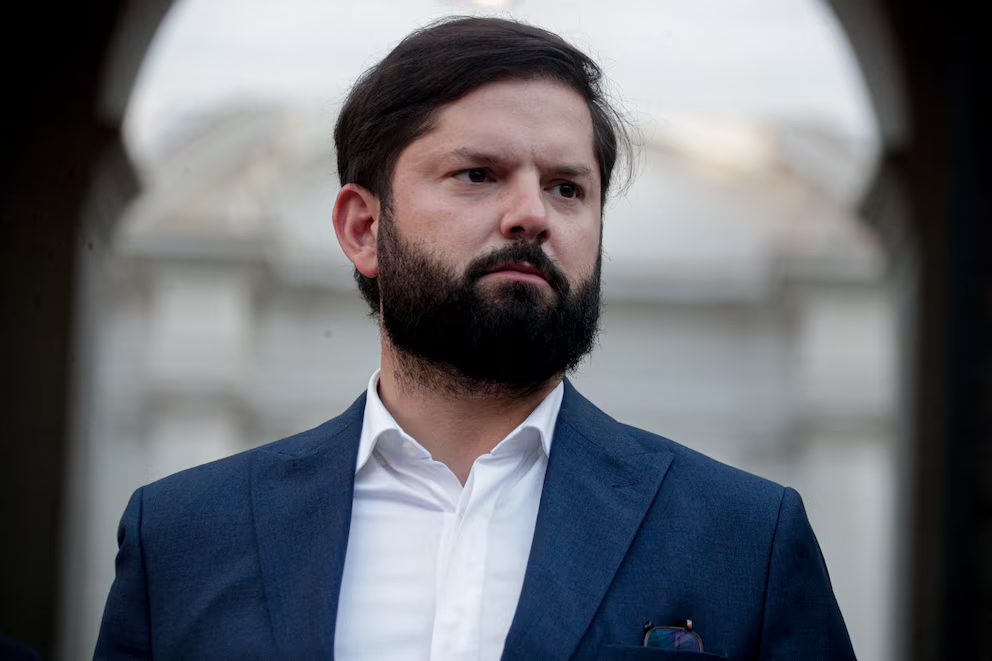
From Promising the End of Neoliberalism to Moderation: Boric’s Four Years in Chile
The Rise of Gabriel Boric
In March 2022, Gabriel Boric took office as Chile’s youngest president at just 36, carrying with him the hopes of a nation yearning for change. His campaign was marked by a powerful statement: “If Chile was the cradle of neoliberalism, it will also be its tomb.” Boric’s vision promised profound reforms, challenging the entrenched neoliberal policies that had shaped Chile for decades.
Early Challenges and Public Discontent
Boric’s presidency began under a veil of immense expectations, but his administration faced immediate hurdles. By the six-month mark, the momentum began to wane as public approval stabilized around a low 30%. Many Chileans expressed frustration over unresolved issues, notably crime and economic stagnation, highlighting a disconnect between Boric’s agenda and the populace’s priorities. As political analyst Rodrigo Arello pointed out, Boric misread the urgency of the nation’s needs, opting for gradual change rather than the rapid reforms anticipated by citizens.
The Constitutional Referendum
Boric’s most significant setback came in September 2022 when a proposed constitutional overhaul, integral to his platform, was overwhelmingly rejected by the electorate. This defeat not only damaged his credibility but also forced a shift in strategy. To realign with political realities, Boric reshuffled his government, ousting several progressive allies to bring in more centrist voices from the traditional forces he previously criticized.
Legislative Achievements and Setbacks
Despite lacking a parliamentary majority, Boric managed to pass several landmark laws. These included the implementation of a 40-hour work week, an increase in the minimum wage to nearly $600, and crucial reforms in mining royalties and pension systems. The latter adjustment enabled a notable 35% increase in pensions, marking it as one of his key accomplishments. Economically, however, Boric’s tenure faced scrutiny; while inflation was stabilized, growth remained moderate, according to economist Carlos Smith.
Global Standing and Internal Challenges
Boric’s approach to foreign policy, particularly his condemnation of authoritarian regimes in Venezuela, Cuba, and Nicaragua, garnered him international acclaim, aligning him with progressive leaders like Brazil’s Luiz Inácio Lula da Silva. However, it simultaneously created a rift with some leftist factions at home who felt sidelined. Claudia Heiss from the University of Chile suggested that Boric’s inclination towards consensus-building with the opposition was better received internationally than domestically, especially amid rising right-wing sentiments.
The Transition of Power
As Boric prepares to hand over power on March 11, he faces the daunting task of navigating his legacy. He will be succeeded by José Antonio Kast, a far-right leader who once lost to him in the elections. This political shift is viewed by analysts as partly reflective of Boric’s failure to address the pressing concerns of everyday Chileans—a sentiment echoed by sociologist Lucía Dammert, who emphasized the left’s struggle to resonate beyond elite circles.
Looking Ahead
At 40, Boric’s political journey is far from over. There’s a prevailing belief among analysts that he will continue to be a significant player in Chilean politics, perhaps even aspiring to return to La Moneda in future elections. The lessons learned during his presidency could shape a new narrative for a progressive left that seeks to engage directly with the citizenry, emphasizing their realities over theoretical ideals.
In conclusion, Boric’s four years in office are characterized by a mix of promise, disappointment, and resilience. He managed to effect some change in a turbulent political landscape, but his legacy will ultimately be judged by how well he can reconcile the aspirations of his supporters with the practical needs of the nation.