
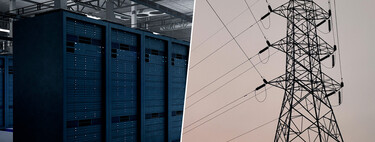
## The Great Paradox of Spanish Energy
The Spanish energy market has split into two seemingly disconnected segments. On one side, the retail market—direct sales to consumers—faces significant customer attrition, with traditional giants losing clients at an alarming rate. Conversely, these same companies report record profits, leading to a perplexing paradox in the energy sector.
### Why Are Profits Rising Amid Customer Loss?
How can companies achieve record earnings while concurrently shedding hundreds of thousands of customers? The answer lies in a fundamental shift in business strategy. Major electricity firms like Iberdrola and Endesa have shifted their focus from being mere “light sellers” to becoming managers of extensive infrastructures. The real profit source is no longer the average consumer’s bill but controlling the cables, regulated assets, and energy required by emerging technological giants.
### The Bleeding of 1.3 Million Contracts
Data from 2025 reveals a staggering loss, with Iberdrola and Endesa collectively shedding nearly 1.3 million customers—specifically, 634,000 from Iberdrola and 645,000 from Endesa. The responses from these companies to this mass exodus illustrate their differing strategies. Iberdrola’s president, Ignacio Sánchez Galán, downplayed the issue as “normal rotation,” while Endesa has raised alarms, announcing a €900 million investment focused on recovering lost customers.
### The Rise of Alternative Firms
Recent trends show that consumer dissatisfaction is prompting record-level mobility within the energy market, as over 7.25 million people switched suppliers last year. New entrants like Octopus Energy and Repsol have capitalized on this dissatisfaction, making significant inroads into a space historically dominated by traditional firms. Repsol, particularly, has emerged as a powerful player, surpassing 2.1 million customers.
### Model Breakdown vs. Financial Gains
While losing over a million customers would typically signal a financial disaster, the reality is quite different for these companies. Iberdrola recorded a profit of €6.285 billion in 2025, a 12% increase from the previous year, with Endesa achieving €2.351 billion, an 18% rise. The crux of this paradox revolves around the management of distribution networks, which skyrocketed in profitability—up 77%—while the revenue generated from customer energy generation fell by 27%. This shift indicates that although companies are selling less energy to consumers, they earn more from the regulated fees for utilizing their infrastructure.
### A Shift Towards Infrastructure Investment
Looking ahead, Spanish electricity companies are pivoting away from renewable energy projects, allotting considerable resources to enhancing their networks. Endesa plans to invest €10.6 billion until 2028, with a substantial portion dedicated to electricity networks, while cutting back on renewable investments due to price saturation during peak production times. Iberdrola is following a similar trajectory, directing 62% of its investments toward network infrastructure.
### The Data Center Boom
Additionally, a burgeoning demand for energy from data centers is reshaping the landscape. Endesa has prepared about 3,000 MW of capacity to support these infrastructures, and substantial investments are being funneled into strengthening Spain’s national energy backbone. Companies like Redeia are ramping up their capital expenditures to solidify the high-voltage transportation network necessary for this growth.
### Network Saturation and Regulatory Challenges
However, bottlenecks in Spain’s energy distribution system pose significant stumbling blocks. A staggering 83.4% of electricity distribution nodes are overwhelmed, which has resulted in 130 GW of renewable energy being obstructed despite the network’s physical underutilization. The regulatory framework is evolving, with new “flexible access permits” in the pipeline to alleviate these constraints.
The sector is also witnessing a cleanup, with the government cracking down on inactive electricity marketers, ensuring only viable firms remain to mitigate systemic risks.
### The Definitive Metamorphosis
Ultimately, the landscape of Spain’s electricity market is undergoing a transformative metamorphosis. The traditional model, centered around consumer billing, is waning. Companies recognize that the future belongs not to those selling electricity to consumers, but to those owning the crucial infrastructure—the highways for energy distribution. This shift symbolizes a strategic evolution that places infrastructure ownership at the forefront of profitability, setting the stage for the next chapter in Spain’s energy saga.