
The March Against Labor Reform: Security Measures and Mobilization
Context of the March
The National Congress is set to witness significant unrest as the ruling party and opposition clash over the Labor Reform Law backed by President Javier Milei. This legislation, a cornerstone of the Freedom Advances (LLA) agenda, is poised for a vote before the ordinary sessions commence on March 1.
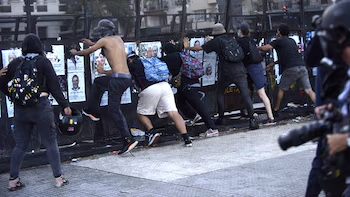
Protesters from union organizations, social movements, leftist parties, and various picket groups are mobilizing once again. Their goal is to express their vehement opposition to what they deem a regressive assault on workers’ rights, often branding the reform as akin to “slavery.”
Timeline and Expected Attendance
Demonstrations are expected to begin around 10 AM, just one hour before the parliamentary debate initiates. The primary assembly will occur at Congress Square, bordered by Avenida Entre Ríos, Avenida Rivadavia, Virrey Cevallos, and Avenida Hipólito Yrigoyen.
Like previous protests on January 11 and 19, tensions are high, with expectations of potential clashes erupting once more.
Security Measures in Place
The government is implementing a robust police operation featuring approximately 2,000 officers from federal and City Police, reinforcements of motorized brigades, and swift response units. Field preparations include fire trucks and ambulances, highlighting a tangible readiness for possible unrest.
Security measures comprise a strict anti-picketing protocol, with heightened vigilance on defusing any occurrence of violence, reminiscent of the confrontations that marred earlier demonstrations.
Broader Implications of the Reform
In line with the agenda, lawmakers are also poised to debate the controversial proposal to lower the criminal liability age from 16 to 14 years. In tandem with the labor law discussions, previous legislative victories, such as amendments to the Glacier Law and the ratification of the trade deal between Mercosur and the European Union, hint at a concerted effort by the government to push through critical reforms.
Activist leaders like Silvia Saravia stress the importance of resisting these reforms, framing them as part of a broader agenda of exclusion and social injustice.
Divergence in Union Responses
Historical fractures are becoming more visible within the Argentine labor movement. While some factions voice support for the protests, prominent groups like the CGT have opted out of calling outright strikes. Activists within the United Trade Union Front (FreSU) are rallying for a national strike today, signaling significant divisions in labor responses.
Notably, the Movement of Excluded Workers (MTE) highlights the challenges of mobilization, indicating that intensified police control has dampened turnout for protests. Concerns over job security and the vagaries of economic deprivation have made many hesitant to join demonstrations, further complicating the situation.
In summary, the upcoming march against the labor reform highlights not only systemic discontent but also the complex interplay of politics, labor rights, and social justice in Argentina. With security ramped up and a heterogeneous mix of protest voices, the day will serve as a litmus test for the current political climate and the resilience of social movements in the face of stringent government measures.