
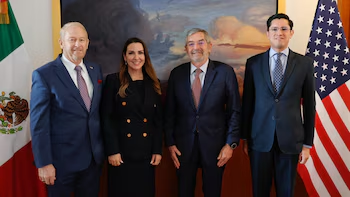
Strengthening Bilateral Cooperation on Drug Control
On February 16, Chancellor Juan Ramón de la Fuente met with Sarah Carter, the director of the U.S. Office of National Drug Control Policy. The primary aim of this meeting was to fortify bilateral cooperation in public health and the war on drugs, with an emphasis on respecting sovereignty and collaborating without subordination.
Key Focus Areas of the Meeting
During the discussions, key topics included the exchange of best practices related to drug prevention campaigns and raising awareness. Additionally, they strategized on combating fentanyl trafficking and other synthetic drugs, aiming to dismantle illegal supply chains and tackle arms trafficking.
Joint Security Strategies
Further discussions within the realm of bilateral collaboration took place on February 25. The Mexican Security Cabinet, including Ronald Johnson, the U.S. ambassador to Mexico, and Sarah Carter, convened to focus on security matters.
Focus on Recent Developments
These discussions were particularly timely, held shortly after the significant capture of Nemesio Oseguera Cervantes, known as “El Mencho”. The conversations emphasized restoring trust and cooperation between both nations, rooted in the principle of mutual respect for sovereignty. Ronald Johnson commended the prompt actions of Mexican authorities surrounding this operation, deeming it a significant blow against violent criminal organizations affecting both countries.
Recognizing Achievements in the Fight Against Drugs
The cooperation efforts have reportedly led to saving lives and disrupting transnational criminal organizations, benefiting communities on both sides of the border. This bilateral strategy continues to aim at enhancing security and stability for nations involved.
Broader Economic Context
Before the meetings with Carter and Johnson, Juan Ramón de la Fuente discussed ongoing economic reforms with Mathias Cormann, the OECD Secretary-General. They reviewed Mexico’s progress in addressing inequality and poverty, highlighting the exit of 13.5 million people from poverty and a remarkable increase of over 250% in the minimum wage.
Investment in Science and Technology
During these discussions, the establishment of the Secretary of Sciences, Humanities, Technology and Innovation was also noted, aimed at strengthening national science and technology while ensuring international cooperation remains a priority.