
Marie Curie’s Notebooks: A Legacy of Radiation
If you visit the basements of the National Library of France (BnF), seeking to explore its bibliographic treasures, you’ll face strict protocols. Wearing gloves and adhering to controlled conditions are mandatory to safeguard the precious volumes from light exposure and degradation. However, the situation is quite different when it comes to the notebooks of Marie Curie; here, it is you who requires protection.
Controversial Legacy
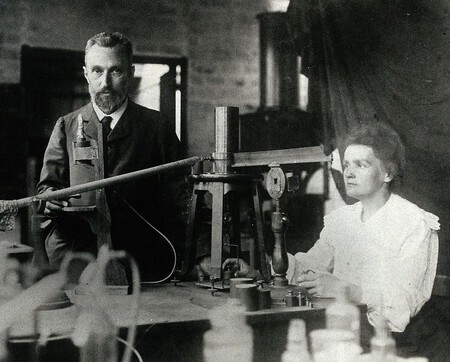
Marie Curie, renowned for her groundbreaking research, passed away in 1934. Yet, nearly 89 years later, her notebooks provoke concerns among archivists due to their radioactive contamination. As she and her husband, Pierre Curie, embarked on their research with uranium, awareness of radiation damage was primitive. They did not implement the safety protocols that are standard today, leading to the contamination of their workspace and materials, including their notebooks.
Safety Measures for Researchers
To mitigate risks, Marie Curie’s handwritten notebooks are now safeguarded in lead-lined boxes within the BnF. Researchers wishing to examine these documents must don special protective suits and sign waivers absolving the library of any liability. This seems like a rational precaution given the circumstances.
Working Under Hazardous Conditions
The Curies manipulated large quantities of uranium-containing minerals, inadvertently exposing themselves to toxic radiation. In an account of their laboratory, noted by historian Philipp Blom, Curie expressed excitement about entering the workshop at night, enchanted by the glow of the radioactive materials. Tragically, this exposure contributed to her own death from aplastic anemia.
Lasting Radioactive Remnants
Given the half-life of radium at 1,600 years, records of contamination are still detectable today. Experts suggest that the notebooks should remain in their lead casings for centuries, if not longer, to mitigate any potential risks. This precaution emphasizes the long-term impact of Curie’s groundbreaking yet dangerous research.
Global Interest and Digital Access
Curie’s research materials aren’t confined to the BnF. The Wellcome Collection also holds a digitized version of a Curie notebook, featuring sketches and notes from her early experiments. Despite contamination with radium-226, this volume poses minimal risk and is accessible online for educational purposes.
The fascination with Curie’s “contaminated notebooks” has generated considerable scholarly interest, even leading to dedicated sections on websites like marie-curie.eu. Curie’s legacy serves as a cautionary tale about the need for safety in scientific research.
Impacts Beyond the Laboratory
The house where Marie Curie worked is also marked by radiation, earning it the ominous nickname “Chernobyl on the Seine.” Even in death, Curie rests in a lead-lined sarcophagus in the Pantheon of Paris, a fitting yet somber tribute to a scientist whose discoveries changed the world, but at a significant personal cost.