

The Future of Telework: A Shift Driven by Boomer Retirement
Teleworking in Spain has seen a significant increase since 2019, doubling to approximately 14%. However, this growth has plateaued in recent years due to corporate mandates pushing employees back to the office. This shift has encouraged hybrid working models to gain traction, while full-time remote work options have begun to decline.
Insights from Research
According to a recent report from the US National Bureau of Economic Research (NBER), this trend may soon reverse as the CEOs of the Baby Boom generation retire. This pivotal moment is projected to facilitate a resurgence in remote work environments.
Young Workers Prefer Remote Options
The NBER study highlights that employees in companies founded after 2015 enjoy an average of 27% more teleworking days than their counterparts in older firms. Additionally, self-employed individuals tend to work from home over twice as often as their traditionally employed counterparts. This generational divide indicates a clear preference among younger workers for flexible work environments.
Research conducted by Stanford University examining 8,000 American workers shows a correlation between age and the likelihood of teleworking. Younger employees are significantly more prone to work remotely, particularly in startups where flexible work arrangements are often cultivated from the outset.
Impact of CEO Age on Teleworking Policies
The age of a company’s CEO directly influences the number of teleworking days offered. Younger CEOs tend to provide more options for remote work, reflecting a cultural shift towards acceptance of telecommuting as a standard rather than an exception. The NBER report notes that such companies show a notable decrease in required office attendance as CEO age declines. This generational transition in leadership is likely to reshape workplace norms dramatically.
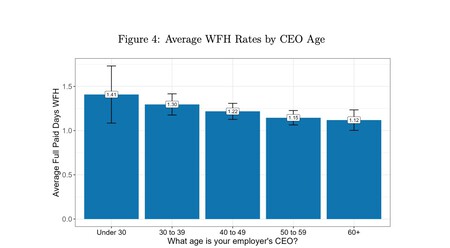
Relationship between the age of CEOs and teleworking time Source: NBER
Transitioning Leadership and Future Work Cultures
As Baby Boomer and Generation X managers retire over the coming decade, Millennials and Generation Z are poised to take the reins. This transition may once again normalize teleworking despite the current stringent policies of major corporations like Amazon and JPMorgan, which mandate five-day office attendance.
The findings from the NBER study also suggest that those wishing to work more from home should consider seeking employment at younger companies with younger leadership. This strategic choice may accelerate access to desired remote work arrangements.
Embracing Remote Work in Modern Companies
Companies led by younger CEOs are more likely to value flexible hours and the well-being of employees. These organizations typically leverage modern technologies like Slack and Zoom, creating a seamless blend between remote and in-person work. Mark Dixon, CEO of the coworking platform International Workplace Group (IWG), emphasizes that businesses that embrace advanced technology and flexible practices will thrive in a people-centric environment.
As telework reshapes the labor landscape, it will become crucial for both employees and employers to adapt to the evolving demands and embrace the benefits of a more flexible work culture.