
Understanding the Journey Beyond Launch
When we discuss satellite launches, we often think the adventure culminates when the rocket pierces the atmosphere and delivers its payload into orbit. However, this moment marks just the beginning of a complex journey. Successfully placing a satellite in space is merely the first step; the real challenge lies in maneuvering the satellite to its designated operational point and ensuring it can deliver its intended service under the required conditions.
Introducing UARX Space
Amidst this new phase of satellite operations, a Spanish startup, UARX Space, is emerging as a key player. Located in Nigrán, Galicia, UARX Space was founded in 2020 and has adopted a unique strategy: progressing with low public exposure while emphasizing technological maturation. This approach allows the company to develop advanced systems before unveiling them to the market.
A Milestone in Readiness
Recently, UARX Space announced a significant advancement: their OSSIE orbital vehicle has successfully completed its environmental qualification campaign. As shared in a LinkedIn post, this stage included rigorous tests for vibration, tightness, and conditions that closely mimic the challenges of launch. The results confirm that OSSIE is ready for its upcoming mission.
The Role of a Satellite Tug
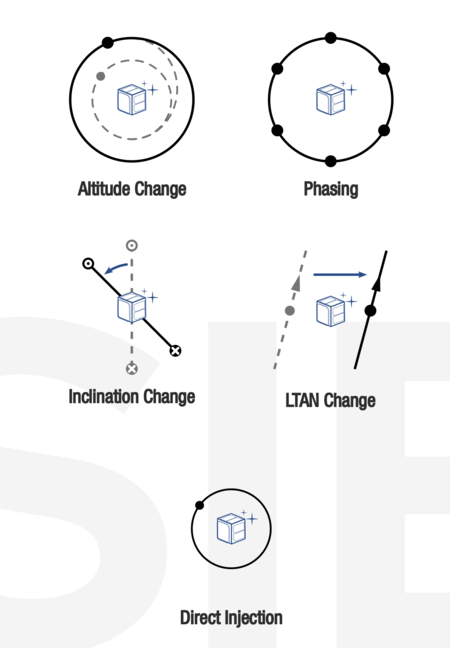
The OSSIE vehicle does much more than transport satellites from one point to another; it plays a crucial role in ensuring that payloads reach their specific orbits. The system is crafted to perform precise orbital injections and modify satellite parameters, which is essential for the functionality of satellite constellations. The OSSIE’s capabilities will have a lasting impact on satellite deployment, contributing to the reliability of data transmission and other satellite functions.
Anticipated Launch Dates
With the completion of this critical testing phase, the imminent question is: when will the inaugural flight occur? Public information from UARX reveals that the first OSSIE mission is planned for the first quarter of 2026, with an initial insertion into a sun-synchronous orbit at an altitude of 500-600 kilometers. Details further indicate that the launch will utilize SpaceX’s Falcon 9 rocket, marking an important step forward for Galician space technology.
Initial Mission Objectives
During its first mission, OSSIE is expected to carry twelve loads, including a significant project called CORTIS. This initiative, developed by UVigo SpaceLab, aims to compare commercial radiation sensors with proprietary options while testing a specialized flight heritage camera. CORTIS’s readiness, having passed its own vibration tests, exemplifies the partnership between academic and industrial sectors, showcasing a solid model of collaboration.
Future Prospects: In-Orbit Services
Looking beyond satellite transport, UARX Space envisions a new operational paradigm in space. The company is collaborating with Dawn Aerospace on integrating a docking system for OSSIE. Although the initial mission will only use this system structurally, it sets the groundwork for future in-orbit services, including potential refueling. This represents a transformative shift within the European ecosystem, demonstrating a commitment to sustainable space operations.
Conclusion
As UARX Space prepares for its OSSIE vehicle’s inaugural flight, the future of satellite deployment and operational efficiency looks promising. This Spanish startup’s innovative approach could very well change how we manage our satellites in orbit, paving the way for more agile and responsive space capabilities.