
The Eruption of La Palma: A Silent Catastrophe
For almost three months, from September to December 2021, La Palma was engulfed in the longest and most destructive volcanic eruption in recent history. The Tajogaite volcano erupted on the Cumbre Vieja dorsal, displacing thousands, burying neighborhoods in lava, and dramatically altering the landscape. This eruption highlighted that the end of lava flow did not signify the volcano’s cessation but rather introduced new challenges.
The Hidden Threat of Carbon Dioxide
In Puerto Naos, although lava never directly reached the town, the volcano’s impact was felt through the accumulation of carbon dioxide (CO₂). This invisible yet toxic gas seeped underground, rendering daily life a precarious risk. Following the eruption, CO₂ concentrations skyrocketed to lethal levels in some areas, leading to the closure of homes, businesses, and even beaches. Residents were forced to confront the unsettling reality that danger now lurked beneath them, hidden from sight.
A Revolutionary Response: Thousands of Sensors
Recent reports indicate that Puerto Naos has transformed into one of the most monitored areas globally, particularly in terms of CO₂ levels. Over 1,300 sensors have been strategically placed throughout the town to continuously monitor CO₂ emissions. This initiative, known as the CO₂ Alert project, has redefined how gas threats are managed. Instead of being an erratic danger, CO₂ has become a measurable phenomenon, enabling a gradual return of residents and businesses under strict safety protocols.
Living Amidst Alerts: A New Normal
Life in Puerto Naos has adapted dramatically. Residents now navigate a landscape punctuated by sensor alarms, with open garages for ventilation and cordoned-off areas. The dense CO₂ tends to accumulate and is visually recognizable in spaces like narrow courtyards, where it has hidden dangers. This persistent threat not only affects the environment but also deeply influences the psychology and decisions of those who have chosen to stay.
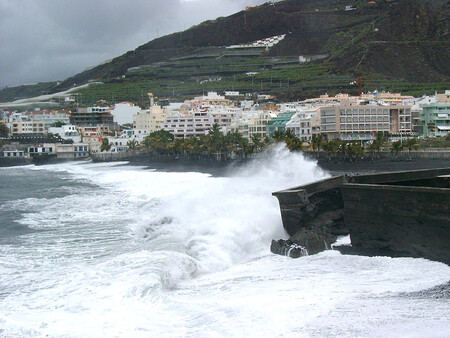
View of part of Puerto Naos
Playa Chica: The Focus of Current Efforts
As of 2026, the situation in Puerto Naos has become more targeted. The main concern has shifted to specific areas like Playa Chica and certain garages, where CO₂ continues to emerge from the ground. This geological characteristic has been likened to “volcanic Gruyere cheese,” indicating the complexity of the situation.
Capturing Underground Gas: A New Methodology
To combat the CO₂ problem, experts have adopted a groundbreaking approach: ventilating the ground instead of the buildings. By capturing CO₂ underground and channeling it through pipes to designated expulsion points near the sea, they can safely disperse the gas. Initial tests have illustrated a drastic reduction in CO₂ concentrations, providing hope that this method could be a dependable solution moving forward.
The Challenge Ahead: Closing the Volcano
While life in Puerto Naos is slowly returning to normal, the ultimate goal is to mitigate any further volcanic threats. The process of integrating CO₂ extraction systems into urban infrastructure is complex, but it is a necessary step to ensure long-term safety. The community is now learning to coexist with the reality of their volcanic environment, understanding that the volcano’s pulse continues even when it appears dormant.
Conclusion
Puerto Naos stands as a testament to resilience in the face of nature’s hidden dangers. The tragedy has reshaped not only the land but also the community’s approach to living alongside volcanic threats. In La Palma, the future will depend on continuous monitoring and adaptation to ensure safety while embracing the unique challenges of their environment.