
### The Remarkable Discovery of the Oldest Vomit in the World
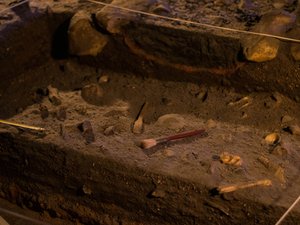
On January 30, 2026, researchers from the CNRS made a groundbreaking announcement: they unearthed fossilized vomit in Germany, dating back an astonishing 290 million years. This ancient regurgitation, known as a “regurgitalith,” is believed to have come from a super-predator that roamed the Earth long before the age of dinosaurs. This find could significantly enhance our understanding of prehistoric life and the ecosystems of that era.
### What is a Regurgitalith?
The term “regurgitalith” refers to fossilized vomit, a concept that may sound unpalatable but is crucial for paleontological studies. Fossils are often the only remaining evidence of creatures that once lived, and regurgitaliths provide unique insights into the dietary habits of these creatures. The vomit discovered in Germany stands out not just for its age but also for its content, revealing the complex food webs that existed long ago.
### The Fossil Site: Bromacker
The site where this remarkable discovery was made is known as Bromacker, a location famed for its richness in fossils. The international research team, which includes specialists from various fields, delved into the sediment layers of Bromacker and uncovered this ancient regurgitation. The vomit is believed to have accumulated over several hundred thousand years, cementing its status as the oldest vomit ever found.
### Dietary Insights from the Fossilized Material
Inside the fossilized vomit, researchers found partially digested bone fragments, predominantly from small reptiles and an amphibian. This discovery offers crucial information about the diet of the super-predator responsible for the vomit. Scientists suggest that this creature, possibly Dimetrodon or Tambacarnifex, was an opportunistic feeder, preying on numerous smaller animals within its ecosystem.
These “mammalian reptiles,” as they’re described, exhibited traits closely linked to mammals, further blurring the lines between traditional classifications of species. This not only provides a glimpse into their predatory behaviors but also helps reconstruct the food chains of that period, illustrating how different species interacted within their habitats.
### Implications for Understanding Prehistoric Ecosystems
The implications of this discovery stretch far beyond the vomit itself. Understanding the dietary habits of these super-predators allows researchers to gain a clearer understanding of the prehistoric ecosystems and how they functioned. The fossilized vomit serves as a snapshot of an ancient food web, illustrating the complex relationships between various organisms.
Furthermore, the research on this regurgitalith could lead to even more insights as scientists continue to study the remaining fossils at the Bromacker site. Each piece of evidence contributes to a more comprehensive understanding of life and its evolution on Earth.
### Conclusion
The discovery of the oldest vomit not only reveals intriguing details about ancient predators but also underscores the intricate web of life that existed 290 million years ago. As scientists delve deeper into this find, we can anticipate more revelations that may shift our perspectives on the distant past, bringing to light the remarkable adaptability and diversity of life long before humans walked the planet.