
The Rise of Clawdbot: An AI Personal Assistant That Controls Your Computer
A couple of weeks ago, programmer Peter Steinberger unveiled a groundbreaking AI agent on GitHub named Clawdbot, quickly sparking interest across the artificial intelligence community. This development promises incredible capabilities but also raises serious concerns regarding its risks and security implications.
What is Clawdbot?
Clawdbot is a free AI personal assistant designed to control various devices effortlessly. Users can interact with Clawdbot through multiple platforms such as WhatsApp, Telegram, Slack, and Discord, among others. The essence of Clawdbot lies in its ability to perform a range of tasks upon installation, all of which require the agent to have extensive permissions. This includes the ability to open applications, modify files, and access configured accounts.
The Risks of Clawdbot
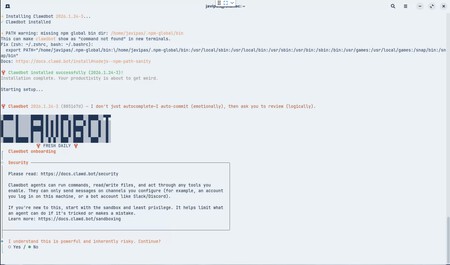
After testing Clawdbot on an old MacBook Air with Zorin OS 18, the sheer power of this agent became apparent. The installation process is straightforward; however, the initial prompts caution users about the potential risks involved. Specifically, Clawdbot can execute commands and manipulate files, making it crucial for users to work within a controlled environment or “sandbox” to mitigate risks.
Experts have voiced their concerns regarding Clawdbot’s security framework. The agent’s comprehensive access to system features—including the console, browser, email, and calendar—offers remarkable convenience, but it also poses a high security risk. A scenario known as “prompt injection” can exploit this access, potentially allowing malicious actors to manipulate Clawdbot’s commands.
How to Safely Use Clawdbot
Given the significant risks, it’s advisable to install Clawdbot on a virtual machine or a dedicated, inexpensive VPS. Additionally, utilizing an SSH tunnel and connecting through disposable numbers can enhance security measures. Some users have even developed scripts to “harden” the security of their installations.
Unlimited Possibilities with Clawdbot
Once users acclimate to the inherent risks, they can unlock numerous possibilities through Clawdbot. Utilizing AI models such as Claude or ChatGPT (preferably the paid versions), users can harness Clawdbot for a multitude of tasks. These tasks may include programming, making reservations, organizing files, or even controlling home automation systems. The options appear to be nearly endless.
Interacting with Clawdbot
Clawdbot’s integration with messaging platforms makes it an attractive solution for remote control of a machine. Users can send commands via WhatsApp or Telegram, such as opening web browser tabs or executing terminal commands, showcasing Clawdbot’s versatility. Though similar interactions exist with other AI platforms, Clawdbot’s ability to control a computer directly amplifies its functionality significantly.
Memory and Personalization
Another exciting feature of Clawdbot is its “infinite” memory, feeding off the device’s data to provide more personalized responses. The more information users share, the more proactive and helpful Clawdbot can become. This level of engagement sets it apart from traditional AI platforms that impose stricter limitations.
Conclusion
Clawdbot represents a fascinating advancement in the realm of AI personal assistants, offering users unparalleled control and a realm of possibilities. However, its extensive permissions and risk factors need careful consideration. Users should approach Clawdbot with caution, understanding that while it’s an extraordinary tool, it comes with significant responsibilities. As the saying goes, “With great power comes great responsibility.”