
The Fight Against Distraction
Across the ages, human evolution has honed our ability to distract ourselves. Whether at home, in a public space, or during quiet moments, distractions are everywhere. The hum of a conversation, the flutter of a fly’s wings, or even an errant thought can easily pull our attention away from tasks at hand. This enduring struggle is not a modern affliction; it has plagued humanity for centuries.
A Glance Back at Procrastination
The issue of procrastination dates back to antiquity. Nearly 2,000 years ago, Seneca highlighted the perils of wasting time, while medieval monks grappled with the challenge of maintaining focus, attributing lapses in concentration to supernatural influences. Fast forward to 2025, and the struggle remains largely unchanged.
The Ever-Present Distraction
A quick online search yields countless articles and videos offering tips to improve focus. With the rise of smartphones, social media, and numerous digital distractions, our capacity to concentrate continues to wane. Research suggests that humanity is increasingly overwhelmed by an influx of stimuli, making focused thought a rare commodity.
Hugo Gernsback and the Invention of The Isolator
To tackle distraction head-on, inventive minds have long sought solutions. A particularly radical and fascinating approach emerged in 1925 from Hugo Gernsback, a Luxembourgish-American inventor known for his pioneering work in science fiction and technology.
The Genesis of The Isolator
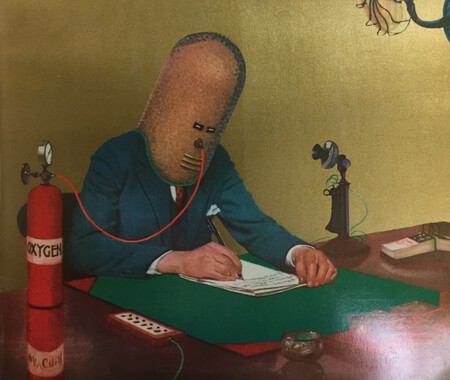
Gernsback was not only an inventor but also an influential publisher, credited with establishing vital science fiction publications like Amazing Stories. In the summer of 1925, he introduced ‘The Isolator’ through the Science and Invention magazine, touting it as the ultimate solution for distractions.
This elaborate apparatus resembled a gigantic diving helmet, complete with narrow eye openings and an oxygen supply tube. It aimed to provide the wearer with total isolation, finally creating a conducive environment for intense focus.
Design Features and Improvements
Gernsback concluded that simply being in a quiet room wasn’t enough to eliminate distractions. His creative vision led to the development of a multi-layered helmet designed to minimize noise and visual stimuli. The initial prototype, made of solid wood, was later refined to improve performance.
Achieving Isolation
Gernsback’s engineering led to an isolation efficiency of up to 95%, effectively blocking external noise while limiting vision to a narrow strip. This design aimed to ensure that users could focus solely on the task in front of them.
Breathing and Comfort Challenges
However, prolonged use of ‘The Isolator’ posed comfort challenges; users reported drowsiness after just 15 minutes. To counteract this, Gernsback improved the breathing system by integrating a small oxygen tank, enhancing comfort and vitality while focusing.
The Reality of The Isolator’s Success
Nevertheless, the invention remained largely theoretical. Despite its intriguing design and detailed plans showcasing a distraction-proof office, only a few prototypes of ‘The Isolator’ were ever constructed, with estimates suggesting just 11 units were made.
Limitations of The Design
While its concept was visionary, the helmet faced practical drawbacks, particularly regarding air circulation. Balancing oxygen flow without risking CO2 build-up complicated its usability, leading to questions about its practicality for widespread use.
Conclusion: An Imagination in Technology
Ultimately, Gernsback’s helmet represents the clash between innovative design and practical execution. It illustrates humanity’s perennial struggle against distraction and procrastination—a battle that continues to this day. Though ‘The Isolator’ never became a mainstream solution, it remains a fascinating artifact in the quest for focus and productivity.
Images | University of Minnesota Twin Cities