
Maduro’s Capture: A Step Towards Restoring Democracy in Venezuela
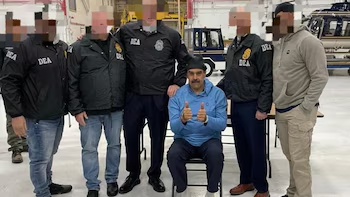
Nicolás Maduro, the figurehead behind Venezuela’s regime, was recently captured by U.S. authorities during a significant operation led by then-President Donald Trump. This pivotal event may mark the beginning of the end for the oppressive Castro-Chávez regime, albeit the broader dictatorship remains entrenched in power.
A Major Breakthrough
The U.S. government acted decisively in apprehending Maduro and his associate Cilia Flores, charging them with crimes spanning narcoterrorism to conspiracy involving machine guns. Their arrest signals a critical step in combating the organized crime that has taken root in Venezuela and throughout the region, including Cuba, Nicaragua, and Bolivia. These nations are now considered part of the “21st-century socialism” network that threatens democratic values across Latin America.
The Threat of a Transitional Illusion
Despite Maduro’s arrest, the current regime underlines a harsh reality: while the dictator may have been ousted, the dictatorial system persists. Historical precedents, such as in Nicaragua (1990) and Bolivia (2019), showcase that a mere “transition” could maintain the criminal structures in place, allowing for a return to power sooner rather than later.
The Urgent Call for Restitution of Democracy
Rather than accepting a slow transition to democracy, what Venezuela requires is a restitution of democracy. This concept is crucial; it denotes a swift and complete dismantling of the existing narco-state apparatus. Three actions are essential to achieving this:
- Abolish the Legal System: The current legal infrastructure upholds dictatorship and must be terminated.
- End Impunity: Immediate legal actions must be taken against those perpetuating human rights violations, narcoterrorism, and systemic corruption.
- Outlaw Criminal Governance: The political entities that have abused power need to be dismantled entirely.
Who Will Lead This Change?
Identifying the leaders capable of realizing this restitution is crucial. The outcomes of upcoming elections, particularly the one slated for July 28, 2024, will test the resilience of the Maduro regime. The legitimacy of Edmundo Gonzales Urrutia, as an interim leader, raises pressing concerns surrounding popular sovereignty and governance mandates.
It’s imperative that Urrutia acknowledges his responsibility to restore democracy, ideally working alongside the true leader, María Corina Machado. This collaboration is critical to represent the Venezuelan people’s desire to escape dictatorship.
The Role of the International Community
The arrest of Maduro reiterates the necessity for global democratic forces to intervene decisively. Failure to capitalize on this opportunity could inadvertently lend legitimacy to the existing criminal regime, perpetuating cycles of control and repression fostered by alliances with countries like Cuba, Russia, and Iran.
Conclusion: A Pivotal Moment for Venezuela
This period marks a crucial juncture for Venezuela. The U.S. operation signifies hope for dismantling a longstanding oppressive regime. However, to avoid the pitfalls of historical transitions and ensure a genuine return to democracy, immediate and decisive actions must be implemented. The choice is clear: Venezuela can either live under the shadow of its past or embark on a new path toward true freedom and democracy, as envisioned by its people.
Carlos Sánchez Berzain, Lawyer and Political Scientist
Read more at Interamerican Institute for Democracy