
Álvaro Uribe Backing U.S. Operations in Venezuela: Insights from a Controversial Statement
Uribe’s Affirmation of Support
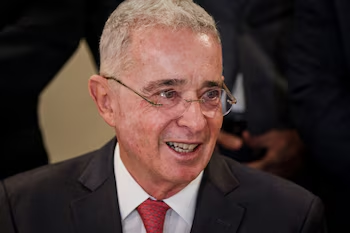
Former Colombian President Álvaro Uribe Vélez has voiced strong support for the actions undertaken by the United States in Venezuela, particularly regarding the recent capture of Nicolás Maduro and Cilia Flores on January 4, 2025. During a virtual forum titled “Venezuela, the United States and Legitimate Defense,” Uribe characterized the U.S. intervention as a necessary response to uphold justice and protect citizens from threats emanating from the Venezuelan leadership.
Uribe’s endorsement reflects the views of the Democratic Center, the political party he founded, emphasizing the ethical imperatives that prompted U.S. actions. “The obligation of a government to justice and the protection of its citizens is an ethical obligation,” he stated.
The Debate Around Legitimate Defense
Carlos Augusto Chacón, the executive director of the Institute of Political Science, echoed Uribe’s sentiments, asserting that the U.S. military operation was not an invasion but rather an act of legitimate defense aimed at detaining a leader involved in drug trafficking and terrorism. Chacón stressed that since Venezuela has devolved from a democratic state into a “criminalized power structure,” actions to restore order are justified.
Conversely, Rafael Nieto, a Senate candidate, raised concerns about the legality of U.S. intervention under international law. He argued that the general prohibition against the use of force does not warrant military actions against all dictatorial regimes. Drawing on past precedents, he distinguished the recent operation from previous actions taken during Uribe’s presidency that he deemed legally justified.
Legal Implications and Concerns
Uribe’s remarks brush against interpretations of international law that could potentially sanction military intervention to restore democracy. He emphasized the ongoing risks posed by allowing territories to be used for drug trafficking and hosting terrorist factions that undermine U.S. security. “How can it not be an aggression?” he questioned, emphasizing a need for stronger action against such regimes.
Criticism of International Organizations
In his speech, Uribe criticized international organizations for their ineffective stances against terrorism and drug trafficking, highlighting a perceived failure to address the larger, systemic issues plaguing Venezuela and its interactions with neighboring countries.
Senator Paloma Valencia noted, “Seeing Venezuelans celebrating the rebirth of their country is moving,” reaffirming Colombia’s support for a democratic transition in Venezuela while emphasizing the Democratic Center’s commitment to defending democracy and the rule of law.
Conclusion: A Call for Unity and Action
The discussions held during this forum underscore the delicate and contentious nature of international relations, particularly when involving matters of national security, democracy, and ethical governance. The response from the Democratic Center signals a rallying cry for unity among proponents of democracy while simultaneously igniting debates on the legality and efficacy of foreign interventions. As political dynamics continue to evolve, the future of Colombia’s stance on Venezuela will likely remain a hot topic in both domestic and international arenas.