
The Internet Has Changed Forever
The internet as we knew it is undergoing a seismic transformation, primarily due to the overwhelming influx of artificial intelligence-generated content. The implications are already apparent: media engagement has plummeted by nearly half, creating a crisis for content creators and consumers alike. Beyond text-based content, the very nature of images has shifted. We’ve moved from authentic documentation of our lives on social networks to a landscape dominated by influencer-driven content, where the authenticity of visuals is increasingly suspect.
The Demise of the Instagram Feed
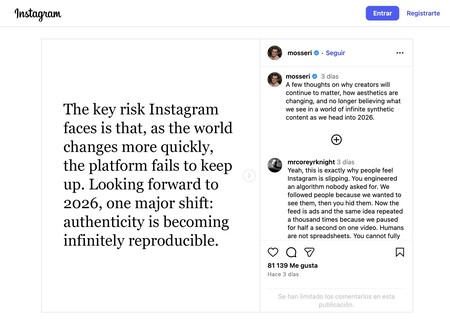
Instagrammers, the feed is dead. According to Adam Mosseri, the CEO of Instagram, the conventional grid of curated photos is a relic of the past. In a recent presentation, he highlighted that engagement styles have shifted dramatically, particularly among users under 25. Mosseri’s remarks echoed a troubling sentiment for many millennials who still cherish Instagram as a personal photo album. “People largely stopped sharing personal moments on the feed years ago,” he pointed out, emphasizing a cultural shift that is unlikely to reverse.
From Curated Grids to AI-Driven Content
As AI continues to shape our online experiences, the aesthetically pleasing, well-lit photos of yesteryear have given way to a flood of unfiltered images. “Flattering images are cheap to produce and boring to consume,” Mosseri asserted, as he urged for a more ‘real’ aesthetic. Users are now gravitating toward candid snapshots of everyday moments—”improvised photos of unflattering shoes and poses,” often shared via direct messages.
Rethinking Reality
What does it mean to see something as real in an age of endless digital fabrication? Javier Lacort indicated that our understanding of epistemology—how we know what we know—is increasingly challenged. “If you see a photo of a tiger, someone has been close to one.” This adage is losing its validity in a world where creating realistic images has become simplistically accessible, thanks to advanced AI tools.
The Shift Toward Skepticism
According to Mosseri, we are moving from a default belief in the authenticity of photographs to a more skeptical stance. “It’s going to take years to adjust,” he noted, suggesting a necessary transformation in our perceptions. This process will doubtlessly be uncomfortable; we are biologically inclined to trust what we see.
Adapting to New Realities
As the digital landscape continues to evolve, Instagram and similar platforms must adapt. Mosseri emphasized the need for enhanced creative tools, suggesting that the platforms should label AI-generated content and focus on verifying what is authentic. “We have to build the best creative tools,” he emphasized, advocating for transparency in who is sharing content.
New Identification Measures
The growing challenge of identifying AI-generated content calls for innovative solutions, including the use of fingerprints and cryptographic signatures in devices. This approach aims to distinguish genuine content from the artificial, moving beyond traditional labels or watermarks.
The Future of Content
We are standing on the precipice of a new digital era, one where the creation of compelling, human-generated content could emerge as a unique selling point. As we navigate this complex landscape, the blend of authenticity and creativity will redefine how we interact with visual media.