
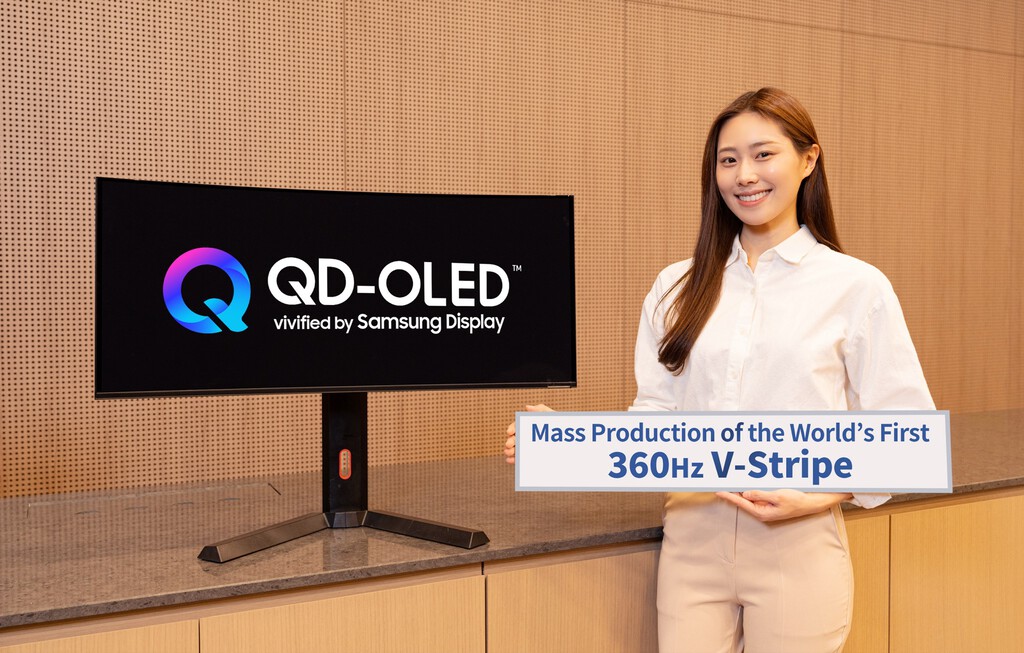
Samsung’s New V-Stripe QD-OLED Panels: A Game Changer
Samsung has officially commenced production of the world’s first 34-inch 360Hz QD-OLED panel that utilizes a groundbreaking V-Stripe (vertical) pixel structure. Initially supplied to seven manufacturers, including industry leaders ASUS, MSI, and Gigabyte, these panels will make their debut at CES 2026.
Importance of the V-Stripe Technology
This innovative shift aims to address one of the long-standing criticisms of OLED technology in monitor applications: the often less-than-ideal sharpness of text. The traditional triangular arrangement of subpixels has led to blurry text edges that deter professional users relying on text-based applications. Samsung claims that the new vertical structure effectively tackles this issue, thereby enhancing clarity and usability.
Dual Market Targeting: Gaming and Professional Use
Interestingly, Samsung is now targeting both the gaming and professional markets with the same panel structure. While the 360Hz refresh rate and 21:9 aspect ratio cater to gamers, the improved text sharpness appeals to a professional audience—such as programmers and content editors—who require precision in their visual output.
Potential Challenges in Manufacturing
It’s worth noting that creating high-refresh-rate, ultra-panoramic panels generates excess heat, which can degrade OLED materials at a faster rate. In their announcement, Samsung highlighted the “optimization of materials and design” as part of their approach, suggesting that they have invested in R&D to address these concerns. This optimization may create a competitive edge that will take other manufacturers time to replicate.
The Premium Monitor Market Landscape
The premium monitor sector serves as a testing ground for the most advanced display technologies. Users are often willing to pay a premium for marginal improvements, making it critical for manufacturers to innovate continuously. Samsung’s advancements position them to potentially set new trends within the industry, especially considering the historical context surrounding OLED technology.
Burn-In Risks: A Psychological Barrier
Despite the advancements, burn-in remains a risk when displaying static content for extended periods—a common scenario in professional settings. The perception of this risk could impede the transition of professional users from traditional LCD panels to OLED.
The Impact of Pricing on Adoption
Ultimately, pricing will be a decisive factor in whether these QD-OLED monitors become a mainstream option or remain as aspirational niche products. If the pricing is not aligned with market expectations, customers may hesitate to adopt this new technology.
The Competitive Landscape Ahead
The response from LG will be pivotal in shaping the future of OLED monitors. As one of the few serious competitors in this space, LG faces pressure to either develop its own advanced pixel structures to compete with Samsung or risk losing out on a market segment that is ripe for disruption.
Looking Forward: The CES 2026 Presentation
The upcoming CES 2026 presentation will be critical in assessing how manufacturers position these new QD-OLED panels. Will they opt for hybrid models suitable for both gamers and professionals, or will they create separate lines for gaming and productivity? The decisions made could set the tone for future developments in display technology.
As advancements continue, it will be essential for consumers and professionals alike to closely monitor these developments to determine which products will best meet their specific needs.