
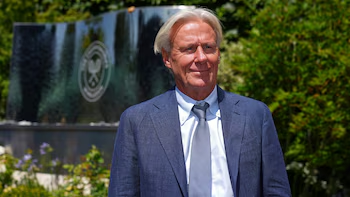
The Struggles of Björn Borg: A Tennis Legend’s Raw Journey Through Addiction
The Price of Success: An Overdose and a Heart Attack
In a candid interview with The Times, Björn Borg detailed the darker chapters of his life after reaching the zenith of tennis. As a former champion, Borg experienced the bliss of victory, but the subsequent void after retiring at age 26 brought him profound challenges. He admits to being on the brink of death from overdoses on two separate occasions, experiences he bravely chronicles in his autobiography, Heartbeats.
He reflects on feeling burdened by secrets, stating, “I felt like I was carrying a huge backpack. I needed to get rid of it.” His revelations offer insight into the personal struggles that can accompany public acclaim.
Near-Death Experiences
Borg’s narrative centers on two harrowing events. The first occurred in February 1989 in Milan, where an unconscious Borg was discovered by his then-wife, Loredana. Initially, the official story portrayed an overdose of sleeping pills, but Borg reveals it was much graver—a dangerous mix of drugs, pills, and alcohol.
The second near-fatal incident transpired in the Netherlands, where he suffered a heart attack accompanied by his father. In a moment of clarity amid darkness, Borg questioned, “How did things end up like this?” His book captures the weight of these life-altering moments.
The Fight for Redemption: Telling His Story
Borg emphasizes the need to share his truth, stating, “Many people see me in one way, through tennis. But they don’t really know what happened to me as a person.” This decision to open up stems from wanting others to understand the dangers that can lurk behind a facade of success.
Support from Loved Ones
A pivotal factor in Borg’s journey to healing was the support of his wife, Patricia. He acknowledges that without her encouragement, the autobiography may never have come to be. “If I hadn’t said yes, the book would never have come out. I would have taken it all to the grave,” he shared.
The Void After Retirement: A Struggle for Identity
Borg’s struggle with addiction began in New York in 1982. After retiring, he found himself in a life devoid of a structured routine, which led him to explore drugs. “I thought, ‘I can try it, what’s the problem?'” he admitted, not realizing the destructive path this would lead him down.
When reflecting on his lost sense of identity post-tennis, Borg candidly stated, “I had no plan. I finally came to a point: What am I supposed to do now? I had no idea. I was lost.”
Finding Purpose Again
His attempt to return to professional tennis in 1991 marked a significant moment of self-rehabilitation. While sporting success eluded him, the return served as a necessary step toward reclaiming a sense of purpose. “I needed to survive. I wanted to live,” Borg remarked.
Recent Health Battles: A New Chapter
In 2025, Borg faced another immense challenge—a diagnosis of aggressive prostate cancer. He described the six months following the diagnosis as mentally taxing, yet he remains focused on living fully, stating, “The cancer is currently in remission, although there are still dormant cells lingering in my body.”
Conclusion: A Story of Hope and Resilience
Borg’s journey, laden with addiction, identity struggles, and health challenges, serves as a poignant reminder of the complexities of life after fame. His candid revelations not only shed light on his personal battles but also offer hope to others facing similar struggles. Through his autobiography, Borg has found a way to heal and inspire, proving that even the toughest journeys can lead to moments of clarity and redemption.