
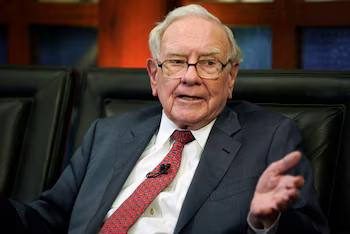
The Legacy of Warren Buffett and Berkshire Hathaway
Warren Buffett, often referred to as the “Oracle of Omaha,” has been a dominant force in investing. After announcing his retirement, concerns arise about the future of Berkshire Hathaway, the conglomerate he transformed from a struggling textile company into a financial titan.
A Milestone Retirement
On December 31, Buffett, now at 95 years old, will retire for what is expected to be his final time. Under his leadership, Berkshire Hathaway has become the ninth most valuable company in the U.S., with a diverse portfolio that includes over 200 companies, making it a unique industrial conglomerate.
The Unique Value of Berkshire Hathaway
Berkshire Hathaway isn’t just recognized for its size; it’s known for its distinct investment philosophy. Buffett’s approach to value investing has yielded incredible returns, significantly outperforming the S&P 500 since he took charge. This remarkable legacy positions the company as one of America’s most revered institutions.
Transitioning Leadership: What Lies Ahead?
Buffett’s successor, Gregory Abel, arrives with a daunting task. As he steps into the role, many question whether he can maintain the company’s trajectory of success. Abel, who is not primarily a stock picker, has a background in Berkshire’s energy sector, which raises doubts about his ability to replicate Buffett’s storied investment acumen.
The Impact of Investment Advisors Departing
The recent departure of Todd Combs, one of the top investment advisors at Berkshire, to JPMorgan Chase adds to the concerns surrounding this transition. Berkshire’s performance as a business operator has been mixed, particularly since the acquisition of BNSF in 2010, highlighting the challenges facing Abel’s leadership.
Looking Forward: Strategies and Opportunities
As interest rates fluctuate, the pressure increases for Berkshire to invest its substantial cash reserves of around $380 billion. Opportunities for acquisitions exist, but caution prevails as market conditions evolve. Despite potential risks, Berkshire’s liquidity could be an advantage if strategic investments are made, particularly in distressed markets.
The Future of Corporate Governance
Berkshire’s governance may shift as more institutional ownership arises. While Buffett remains at the helm of the board, the changing landscape could necessitate more traditional corporate practices, including a potential return of cash to shareholders.
Conclusion: A New Era at Berkshire Hathaway
The transition away from Buffett marks the end of an extraordinary chapter for both him and Berkshire Hathaway. As the company adapts to life post-Buffett, investors and analysts will keenly observe Gregory Abel’s leadership and strategy. The question remains: can Berkshire continue to thrive without its iconic founder at the helm? Time will reveal the answers, but one thing is certain — the legacy of Warren Buffett will always influence the direction of this remarkable company.