
Ceasefire Agreement Signed Between Thailand and Cambodia
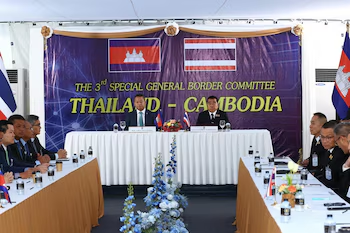
The Governments of Thailand and Cambodia have officially agreed to a ceasefire, effective from noon on December 27. This decision follows the signing of a Joint Declaration at the third special meeting of the General Border Committee (GBC), with mediation from the Association of Southeast Asian Nations (ASEAN) observers.
Key Figures in the Meeting
The session was co-chaired by Cambodian Defense Minister Tea Seiha and Thai Defense Minister Nattaphon Narkphanit. The meeting took place at the international border point between Prum in Pailin province, Cambodia, and Ban Pak Kard in Chanthaburi province, Thailand. This location highlights the importance of cooperation in maintaining peace between the two nations.
Focus on Peaceful Resolutions
During the discussions, both parties reiterated the significance of resolving disputes peacefully. They acknowledged the need for a climate of trust, goodwill, and mutual respect in accordance with the UN Charter, the ASEAN Charter, and the Treaty of Friendship and Cooperation in Southeast Asia.
This agreement marks a crucial step toward establishing a more cooperative and stable relationship between Thailand and Cambodia.
Commitment to Refraining from Hostilities
Both Thailand and Cambodia have committed to refrain from threats or use of force, thereby respecting international borders. This mutual understanding aims to promote regional peace and security, founded on principles of sovereignty, equality, and territorial integrity.
Reaffirming Previous Agreements
Bangkok and Phnom Penh also reaffirmed their commitment to the complete and effective implementation of the ceasefire agreement established on July 28, 2025, along with all subsequent agreements reached in previous GBC meetings. This consolidation of bilateral mechanisms emphasizes the ongoing commitment to foster cooperation.
Path Forward
Both nations emphasized their dedication to resuming dialogue and strengthening earlier agreements in order to eliminate any forms of hostility. The focus is on establishing lasting peace and restoring normalcy along the entire border, fostering trust for future collaborations.