
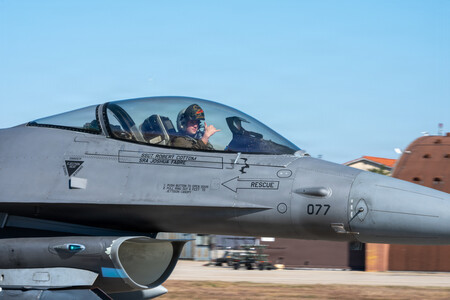
The conversation surrounding modern air combat often centers on advanced platforms like the F-35, a fighter jet that embodies stealth capabilities, cutting-edge sensors, and a vision of Western superiority in military technology. However, a striking and quieter reality persists: a fighter jet born in the 1970s continues to serve and thrive. The F-16, still in production in South Carolina, remarkably maintains its place in the market, garnering new clients as late as 2025.
Why the F-16 Remains Relevant
The F-16’s endurance in the face of newer alternatives prompts a fascinating question: Why do many nations still opt for this classic aircraft? To understand this, we need to explore its origins, evolution, and performance data. It’s essential to differentiate between lofty promises and proven capabilities, as military forces often acquire systems they can reliably operate over the long term.
The Birth of the F-16
The F-16 emerged from internal discussions in the U.S. Air Force about the trend toward larger and more expensive fighters. In the early 1970s, the government launched the Lightweight Fighter program, aiming to develop a nimble and cost-effective aircraft that wouldn’t sacrifice efficiency. The YF-16 prototype first took flight in 1974 and was selected for mass production in 1975 after succeeding in the Air Combat Fighter competition.
Design Philosophy and Technical Features
This design philosophy prioritized operational performance over complexity. The F-16 features a compact airframe with fly-by-wire control, enabling fine maneuverability and advanced stability. The cockpit, designed for optimal visibility, incorporates a reclined seating position for pilots to handle high G-forces effectively.
Adaptability and Modernization
Over the decades, the F-16 has not merely survived; it has evolved. Improvements in avionics, sensors, and payload capability have transformed it into a multi-role fighter, suitable for ground attack missions alongside traditional air-to-air combat. This adaptability has been reinforced through international partnerships, creating a vast community of operators and ongoing support programs, which are essential to the aircraft’s continued relevance.
Operational Advantages
Continuous modernization connects the original F-16 design to the state-of-the-art models produced today, such as the F-16V and the recently introduced Block 70/72. These updated aircraft boast enhanced mission systems, advanced data links, and an AESA radar that significantly improves combat effectiveness. With a declared structural life of 12,000 hours, these aircraft offer unparalleled longevity.
Continuing Global Demand
Recent contracts illustrate the F-16’s robust market presence. For instance, Slovakia has begun receiving new Block 70s, while Bulgaria has opted for this modernized model. Taiwan’s order for 66 F-16Vs and Bahrain’s acquisition of 16 Block 70 units highlight the aircraft’s global appeal.
Adapting to Contemporary Challenges
The F-16 finds utility in real-world conflict as illustrated by the ongoing situation in Ukraine, where it serves as a critical addition to air defense in a war-torn environment. Additionally, Argentina’s acquisition of F-16s to fill gaps in its air defense capabilities shows that the fighter remains vital to various nations facing unique challenges.
The Future of Air Combat
Despite other advanced options such as the F-35, Eurofighter, and Rafale, the F-16’s cost-effectiveness and proven performance create a compelling case for its ongoing relevance. An air force’s strength is not merely measured by the latest technology it possesses but by the sustainability and deployability of its fleet—areas where the F-16 excels.
As we look to the horizon, new sixth-generation programs like NGAD and FCAS emerge. However, they come with high costs and long timelines. In this gap, the F-16 provides accessible and real capabilities, assuring its place in air combat well into the future.