
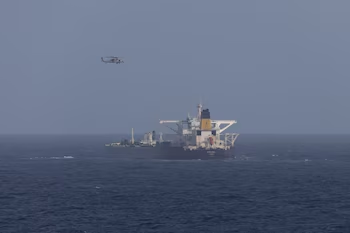
US Coast Guard Operation on the ‘Centuries’
The White House recently confirmed the legality of a US Coast Guard operation involving the tanker ‘Centuries’ near Venezuela. This action is part of a broader strategy aimed at restricting financial flows to the regime of Nicolas Maduro. The Coast Guard’s intervention, which occurred on a Saturday, focused on curbing illicit maritime activities, particularly concerning the trade of sanctioned Venezuelan oil.
Details Surrounding the Intervention
According to statements by the White House deputy spokesperson, Anna Kelly, the ‘Centuries’ was carrying oil from PDVSA, the state-owned oil company of Venezuela, which is currently under US sanctions. Kelly referred to the tanker as a “false flag,” asserting that it operates as part of the “Venezuelan shadow fleet” dedicated to trafficking stolen crude oil to finance Maduro’s regime. This assertion has been met with skepticism, especially considering reports from The New York Times and The Washington Post questioning the legality of the boarding, noting that the ‘Centuries’ is registered to a Chinese company involved in transporting oil from Venezuela to Chinese refineries.
Venezuelan Response
The Venezuelan government condemned the US intervention, labeling it an act of “piracy” and “theft” and claiming that it constitutes a violation of international law. Venezuela has announced intentions to bring the issue before the United Nations Security Council and other international organizations, accusing the United States of violating its sovereignty.
Legal Justifications for the US Actions
Official sources from the US mentioned that the boarding was justified under the “right of visitation,” an international maritime law allowing warships to inspect vessels suspected of illicit activities. This legal framework aims to enhance maritime security and combat the trade of sanctioned oil.
Impact on Venezuelan Oil Trade
The US operation signifies a continuation of sanctions against entities associated with the Maduro administration. US officials emphasized the need for such enforcement to deter the transportation of illicit cargo. As a result, Venezuelan oil traffic has contracted significantly, with around a dozen ships reported to be waiting without being able to dock as port employees express fears over possible sanctions.
Clandestine Oil Fleets and International Waters
The fleet moving Venezuelan crude oil largely operates clandestinely, consisting of older vessels often used for transporting sanctioned oil from Russia and Iran. Approximately 80 vessels were reported to be near Venezuelan waters, with over 30 of them currently under US sanctions.
Precedents in Ship Seizures
While it’s unusual to seize vessels in international waters, there are precedents. In 2020, the US confiscated four Iranian crude oil tankers under judicial authorization, bolstering the legal foundations for such operations.
Conclusion: Ongoing Tensions
As Venezuela remains heavily reliant on oil, accounting for over 90% of its foreign exchange earnings, the ongoing pressure from the US significantly impacts its economy. The Maduro regime continues to grapple with reduced oil prices and the necessity of navigating a challenging international landscape dominated by economic sanctions and military operations focused on maritime enforcement.