
Rosario Fernández’s Controversial Refusal to Sign the Electoral Ethical Pact
Background of the Incident
Rosario Fernández Bazán, a presidential candidate from the party Un Cambio Diferente, sparked intense debate when she publicly refused to sign the 2026 Electoral Ethical Pact. During the signing ceremony organized by the National Election Jury (JNE), Fernández stated, “ethics is not signed, it is practiced.” However, this declaration raised eyebrows, especially in light of her recent criminal denunciation for violent actions at a judicial headquarters.
The Electoral Ethical Pact Explained
The Electoral Ethical Pact is a voluntary commitment designed to promote essential principles of respect, transparency, and responsibility among political parties. The pact aims to foster democratic coexistence and prevent hostile behavior, negative campaigns, and misinformation, which have plagued past electoral processes.
This agreement comprises ten vital points, including:
- Rejection of personal attacks
- Promotion of debates based on proposals
- A call to cease the spread of fake news
- Responsible use of artificial intelligence
- Citizen oversight through a Court of Honor
Mixed Reactions and Backlash
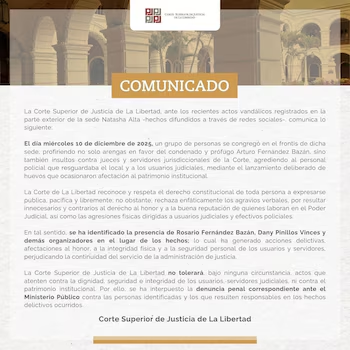
Fernández’s refusal to sign the pact elicited mixed reactions on social media. Some criticized her stance, associating her comments with political financing irregularities. Furthermore, less than ten days prior to the signing event, she was identified as a principal organizer of a protest at the Natasha Alta judicial headquarters in Trujillo.
This protest quickly escalated from chants of support for her fugitive brother, Arturo Fernández, into verbal and physical confrontations against judges, the National Police of Peru (PNP), and judicial staff. Notably, attendees resorted to throwing eggs at the courthouse, leading to official condemnation and a criminal complaint filed by the Superior Court of Justice of La Libertad against Fernández and other identified individuals.
Legal Consequences and Institutional Damage
The Superior Court’s report highlighted that the protest not only led to damage of institutional assets but also jeopardized the safety of all present. The court expressed serious concerns about the erosion of the justice administration service due to these provocative actions.
Fernández and her associates face allegations of criminal conduct stemming from their violent actions during the protest. The complaint aims to hold them accountable for compromising the integrity and security of judicial processes.
Implications for Political Integrity
As the political landscape in Peru evolves, Fernández’s actions serve as a focal point for discussions about integrity and ethics in politics. By rejecting the Ethical Pact while simultaneously facing allegations of violence and misconduct, her stance raises important questions about the consistency and sincerity of her campaign.
Conclusion
Rosario Fernández’s refusal to sign the Electoral Ethical Pact amidst a backdrop of criminal allegations shifts the narrative surrounding her candidacy. As Peru approaches the 2026 elections, the call for ethical governance becomes even more pressing, positioning candidates like Fernández at the center of a critical dialogue about responsibility in political affairs.