
Karina Milei Strengthens Leadership at Casa Rosada
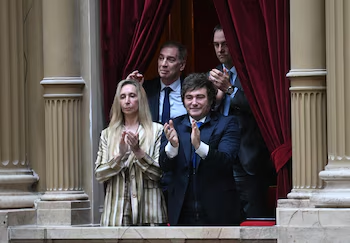
In a remarkable display of authority at the Casa Rosada, Karina Milei has solidified her leadership role by orchestrating the reception of senior government officials. Moments after noon, during the swearing-in ceremony of Lieutenant General Carlos Presti, she commanded ministers, state secretaries, and even high-profile diplomats to rise and acknowledge the incoming official. This incident underscores her understanding and exercise of power, suggesting that she has become a pivotal figure in the Milei administration.
The Cabinet’s New Configuration
With Presti’s oath, the Cabinet of Ministers now stands complete, following recent legislative elections. Karina Milei has effectively transitioned into her role, calibrating significant changes within the government structure. The presidential advisor, Santiago Caputo, though previously uncertain of his position, has chosen to adopt a more visible role, acting as the “Hand of the King” in several critical areas.
Milei’s keen sense of leadership is reflected in the composition of her Cabinet, where important alliances are forming. Notably, her support for various members, including affiliations with figures such as Agustín Romo in the Buenos Aires Legislature, demonstrates her capability to forge necessary political connections.
Improving Cabinet Dynamics
The atmosphere within the Cabinet has reportedly improved, marking the best climate it has seen over the past year. Clear delineation of roles and responsibilities has led to greater effectiveness among Ministers. Despite prior frictions, discussions have resumed between key players in the government, suggesting that collaboration is becoming increasingly important for the efficiency of La Libertad Avanza.
However, the unity appears fragile. While certain factions have begun to find common ground, there remains underlying tension, particularly between the more radical and moderate factions regarding labor reform strategies.
Navigating Labor Reform and Opposition
The Milei administration is currently attempting to navigate the turbulent waters of labor reform. Leaders such as Federico Sturzenegger have advocated for deregulatory approaches, asserting that traditional parties like Peronism maintain power through union alliances. Conversely, more moderate voices within the government, such as those from the Menem family, are keen on fostering dialogue with unions to ensure smoother negotiations.
Despite differing strategies, the urgency for reform is palpable. The administration acknowledges that labor reform will not materialize until early next year, with significant expectations placed on securing half-sanction before Christmas. The government faces external challenges as opposition parties plan to judicialize debates around labor regulations, further complicating the legislative landscape.
The Road Ahead: Budget and Coalition Building
Integral to the Milei administration’s success is the pressing need to pass a budget before the new year. The government underscores this task as a litmus test for proving its commitment to economic stability and reform. Building alliances with provincial governors has been a key strategy, allowing the Milei government to secure critical support ahead of upcoming fiscal discussions.
High tensions concerning financial concessions are evident, particularly with governors expecting increases in federal funding to facilitate local projects. The Milei government is banking on a solid budgetary framework to signal certainty to both the market and the electorate.
Conclusion: The Uncertain Path of Reform
As Karina Milei embarks on this journey of reform, the balance of power within the government remains delicate. The interplay between differing factions, the necessity of labor reform, and fiscal responsibilities will significantly influence the administration’s trajectory in the coming months. While the groundwork has been laid for achieving change, the challenge lies in maintaining a cohesive approach that aligns the various stakeholders engaged in the reform process.