
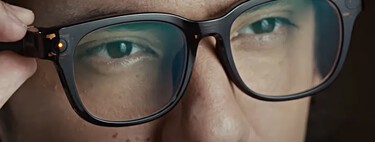
Smart Glasses in China: A Revolution Driven by Payment Technology
In China, AI glasses have transcended novelty to become practical tools for everyday transactions. Users can now make payments simply by looking at a QR code and issuing a voice command. Alibaba has stepped into this space with its Quark smart glasses priced at $268, integrating seamlessly with Alipay for effortless payments and Taobao for shopping. Xiaomi further solidified the trend by launching its own AI glasses, achieving remarkable sales success within just a week of availability, becoming the third-best-selling smart glasses globally in the first half of 2025.
Exponential Growth in the Smart Glasses Market
Recent research from BigOne Lab highlights that the Chinese market for smart glasses is experiencing exponential growth in the latter half of 2025. After years of unmet expectations, smart glasses have finally found a meaningful application in society: facilitating contactless payments without the hassle of rummaging through pockets for a smartphone.
The Impact of Digital Infrastructure
China’s robust digital ecosystem has laid the groundwork for this rapid adoption. In a country where even senior citizens regularly use smartphones, QR codes are ubiquitous in various businesses. Furthermore, the absence of major competitors like Meta, which requires VPN access to operate in China, provides local companies with ample opportunity to innovate freely.
Affordability and Competition
A significant factor in this rapid market surge is the pricing of smart glasses. Ranging from $200 to $300, these glasses are reasonably priced for the average consumer. Companies like Xiaomi, RayNeo, Thunderobot, Kopin, Baidu, and Alibaba are all vying for dominance in a competitive domestic landscape, driving continual advancements and improvements.
Simplifying Payment Through Technology
The functionality that allows users to make payments does not rely on advanced optics or expensive screens. Basic requirements include a straightforward camera, voice recognition capabilities, and connectivity to payment networks. This simplicity significantly reduces production costs, making it feasible for a variety of brands to enter the market.
Europe’s Potential for Mobile Payments
The big question looms: Could Europe see a similar rise in smart glasses facilitated by systems like Bizum? While mobile payments are less widespread in Europe compared to China, Bizum has gained considerable traction in Spain. Should more businesses begin to support Bizum QR codes, there may be a viable market for smart glasses with similar functions.
The Unique Factors in the European Ecosystem
European consumers benefit from stricter privacy regulations and a higher level of trust in established banking systems. However, Europe lacks the high density of QR codes that makes China an ideal environment for testing new technology.
Beyond Hardware: The Value Proposition
Chinese companies are not merely constructing hardware; they are actively developing compelling use cases that justify the daily wear of smart glasses. Instead of seeking out complex functionalities, these companies have honed in on a simple yet powerful advantage: enabling users to keep their smartphones tucked away while managing everyday transactions.
Looking Ahead: The Competitive Landscape
As of early 2025, Meta holds a staggering 73% share of the global smart glasses market, largely due to the widespread appeal of its Ray-Ban Meta design, which resembles conventional eyewear. Nonetheless, Chinese manufacturers boast their own advantages—rapid iteration, a diverse range of products, and an agile approach to market demands.
In conclusion, as China’s smart glasses market continues to mature, the convergence of practical applications like payment solutions is set to redefine how we perceive wearable technology. Both hardware advancements and real-world usability will inform whether this trend can migrate beyond China’s borders.