
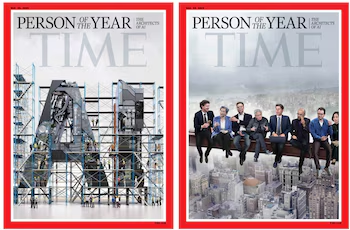
The Recognition of “AI Architects” by TIME Magazine
The magazine TIME recently announced the election of “AI Architects” as Person of the Year 2025. This recognition underscores the profound and transformative role of artificial intelligence (AI) across economic, political, and social spheres globally. Rather than an honorary accolade, this title reflects the impact of individuals or groups on significant events throughout the year. Key figures such as Jensen Huang (Nvidia), Sam Altman (OpenAI), Elon Musk (xAI), Mark Zuckerberg (Meta), Lisa Su (AMD), Demis Hassabis (DeepMind), Dario Amodei (Anthropic), and Fei-Fei Li (Stanford/World Labs) have been acknowledged for their contributions to shaping AI.
The Evolving Landscape of AI
The selection by TIME reflects the unprecedented impact AI has had in 2025, a year where the technology evolved from a futuristic promise to an integral reality in everyday life. As Jensen Huang stated, “Every industry needs it, every company uses it and every nation must develop it.” AI has transformed not only the economy but also geopolitical relations, creating a blend of optimism and apprehension about its potential risks.
Economic and Political Transformations
The rise of AI is leading to significant shifts in international relations and economic strategies. Governments and businesses are acknowledging AI as a critical asset for development. Notably, initiatives like the Stargate project in the United States aim to funnel billions into establishing data centers to enhance AI capabilities and infrastructure.
Societal Implications
The advent and proliferation of AI have led to widespread adoption in various sectors such as healthcare, education, and small businesses. Entrepreneurs and professionals are integrating AI solutions to optimize operations and enhance productivity, redefining daily interactions and expectations.
Challenges and Ethical Considerations
However, the rapid evolution of AI is not without its challenges. Issues such as job displacement, concentration of power, and mental health risks are significant concerns. Estimates suggest that AI could lead to up to 20% unemployment in the near future, prompting urgent discussions about regulation and corporate responsibility.
Significant Concerns
Noteworthy cases, such as that of Adam Raine, who tragically passed away after interacting with a chatbot, have sparked debates about the ethical implications of AI in mental health. Furthermore, the proliferation of misinformation through AI channels raises alarms about its societal impact.
Conclusion: A New Era of AI Governance
As the influence of these “AI Architects” continues to grow, discussions surrounding the governance and oversight of AI technology are becoming increasingly critical. Maintaining a balance between innovation and the protection of individual rights and societal norms requires concerted efforts from leaders, businesses, and policymakers alike. The ongoing dialogue around AI highlights both the immense potential and the inherent risks of this transformative technology, signifying a new era with lasting implications for the future of humanity.