
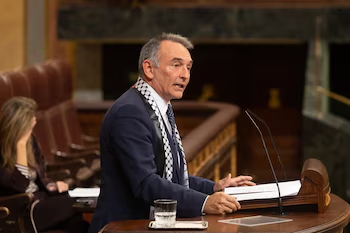
Sumar Responds to Leire Díez’s Arrest: A Focus on Party Financing
The recent arrest of Leire Díez, a former member of the PSOE (Spanish Socialist Workers’ Party), has prompted significant discussion among political leaders. Sumar’s parliamentary spokesperson, Enrique Santiago, has addressed the situation, emphasizing the implications it may have regarding party financing and corruption.
The Context of Leire Díez’s Arrest
Leire Díez’s arrest has raised questions about her activities while a member of the PSOE. Santiago has made it clear that the arrest is being viewed within a specific context, noting that it pertains to a “particular case.” However, he added a crucial caveat: any investigation should focus on the potential for irregular financing related to political parties, particularly the PSOE.
The Broader Issue of Corruption
During a media briefing in Congress, Santiago expressed his concerns about the pervasive nature of corruption within political institutions. He stated, “Unfortunately, there are corruption problems,” and highlighted that many of these issues currently seem to be linked to parties like the PP (People’s Party) and Vox. Santiago lamented that new cases of corruption appear almost daily, underscoring the widespread danger it poses to public trust in politics.
Defining the Limits of Acceptable Conduct
Santiago outlined a clear boundary when discussing issues of corruption, asserting that while private matters concerning individuals are their own concern, the moment those issues cross into the realm of political financing, they must be treated differently. This delineation indicates that Sumar is prepared to take a firm stance if it is discovered that irregular financing is involved.
“The moment the line is crossed and what appears is financing for a party, that is different terms, of course,” Santiago concluded, signaling that Sumar will not tolerate any form of corruption that could potentially undermine democratic integrity.
Implications for Political Accountability
Santiago’s remarks highlight a growing demand among political parties for greater transparency and accountability in financing. By focusing on the implications of party funding and its ethical dimensions, Sumar is calling for heightened vigilance against potential abuses. This approach not only positions the party as a watchdog against corruption but also aligns with a broader societal expectation that political leaders must operate above reproach.
Conclusion
The situation surrounding Leire Díez’s arrest serves as a reminder of the challenges political parties face regarding corruption and transparency. As Sumar articulates its stance on the issue, the conversation shifts toward how parties can establish robust mechanisms for preventing the irregular financing of campaigns. This case will likely continue to unfold, shedding light on the complexities of political ethics and accountability in Spain.