
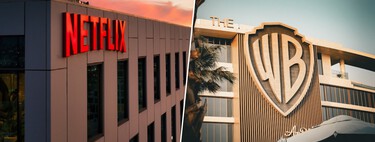
The punch on the table that Netflix delivered last Friday with its announcement of acquiring Warner Bros. sent shockwaves throughout the film industry. The aggressive move raised questions about the future of competition and regulatory acceptance of a near-monopoly. Yet, the most unexpected reaction came from Paramount, which swiftly launched a hostile takeover bid to acquire Warner in a bold counterstrike.
Current Landscape of the Bidding War
Just three days after Netflix’s announcement of its $72 billion acquisition plan, Paramount retaliated with an even more ambitious bid of $108.4 billion. This maneuver involves directly appealing to Warner’s shareholders, essentially bypassing its board of directors. Such tactics have led many to describe the conflict as “a bidding war worthy of Succession.”
High Stakes for Paramount
Paramount’s strategy seeks to take control of one of the most iconic studios in cinema history. With franchises like DC superheroes, Harry Potter, and the vast HBO catalog, Warner offers an invaluable historical and cultural archive. Paramount’s CEO, David Ellison, has put forth an enticing offer of $30 per share in cash, compared to Netflix’s offer of $27.75 per share.
Evolution of the Takeover Efforts
This hostile bid is not a sudden development; it follows three months of persistent offers from Paramount. In September, Ellison initially proposed $19 per share, which Warner’s board swiftly rejected. Subsequent offers of $22 on September 30, $23.50 on October 19, and $26.50 on December 1 were also ignored. By December 4, Ellison raised his offer to $30, but, he claims, received no response. His increasing offers demonstrate a clear willingness to go even higher.
Allegations of a Flawed Process
During a call with investors, Paramount executives accused Warner of “not meaningfully engaging” with their proposals, labeling the auction process as “flawed” and biased in favor of Netflix. In response to this perceived blockade, Ellison chose a more aggressive route, seeking to connect directly with Warner shareholders instead of relying on a board that has historically dismissed their offers.
Comparative Analysis of Proposals
The proposals from Netflix and Paramount significantly differ. While Netflix’s offer includes acquiring Warner Bros. film studios and the HBO Max streaming platform, it excludes the entire cable television business, including networks like CNN and TNT. By contrast, Paramount aims for a comprehensive purchase—$30 per share entirely in cash—and promises $18 billion more in liquidity for shareholders compared to Netflix’s mixed offer of $23.25 in cash and $4.50 in Netflix shares.
Historical Context of Hostile Bids
This current skirmish between Paramount and Netflix over Warner Bros. is not without precedent. In 2004, Comcast attempted a hostile takeover of The Walt Disney Company for $54 billion during a leadership crisis. Another infamous bidding war occurred between Disney and Comcast for 21st Century Fox in 2018. These histories depict a recurring pattern of identifying weaknesses in rival companies and escalating offers while leveraging connections to influence regulatory actions.
The Geopolitical Factor
This hostile takeover bid underscores a unique geopolitical dimension, given Paramount’s link to Affinity Partners, directed by Jared Kushner, son-in-law of President Donald Trump. The financing structure has raised eyebrows, particularly as it involves sovereign funds from Saudi Arabia, Abu Dhabi, and Qatar.
Implications of Political Connections
The connection to Trump complicates matters further. Trump’s vocal criticism of the Netflix-Warner deal, combined with his friendships in the entertainment world, presents an unusual intersection between politics and corporate mergers. Such dynamics challenge decades of tradition wherein U.S. presidents typically remained impartial in antitrust reviews.
As this intense bidding war unfolds, the ramifications for not only Paramount and Netflix but the entire entertainment industry remain to be seen. Will Paramount succeed in its aggressive pursuit, or will Netflix solidify its position as the new titan of the industry?