
Mobility Insights for Bogotá: Peak Traffic and Regional Plate Measures for 2025
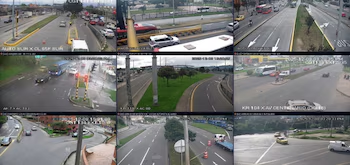
As we approach 2025, understanding the current state of mobility in Bogotá’s primary corridors is critical. Recent reports from the Ministry of Mobility indicate significant congestion challenges, primarily in the Autosur, Autonorte, and Vía al Llano corridors. Identifying these trends ensures residents are well-informed and prepared for commuting in and out of the city.
Current Traffic Conditions
Autosur Corridor
High alert levels have been classified in the Autosur corridor, marked by substantial vehicular congestion. To alleviate this issue, traffic light flashing has been activated at vital junctions, including Calle 65F Sur and Nueva Bosa. Furthermore, a maneuver enabling a fourth lane has been implemented to enhance vehicle entry from the south towards Bogotá, contributing to an improved traffic flow.
Autonorte Corridor
In the Autonorte corridor, vehicle occupancy remains notably high. Meanwhile, secondary routes like Calle 80, Calle 13, and Carrera 7 report medium vehicle occupancy, indicating a greater spread of traffic across different access points into the city. This variability in traffic density necessitates real-time updates for commuters, especially during peak hours.
Other Corridors
The Vía al Llano and La Calera roads remain relatively untroubled, featuring low mobility conditions without any significant traffic disruptions. This offers a contrasting experience for drivers seeking alternative routes into Bogota, providing a respite from the congested corridors.
Implementing the Pico and Plate Regulation
Second Day Overview
The holiday weekend shows medium traffic intensity across Bogotá’s road corridors, per the latest Return Plan balance. While Autosur, Autonorte, and other major routes registered medium flow, La Calera stood out with minimal congestion.
Key measures have been put in place to expedite traffic flow, such as activating flashing traffic signals at important Autosur locations. A reversible lane on Carrera 7, starting at 4:30 PM, further supports returning motorists, while a similar approach on Vía al Llano began at 1 PM. The implementation of the Pico and Plate regulation further standardizes traffic management: during specified hours, vehicles enter based on their license plate numbers.
Cundinamarca Transit Overview
The Return Plan has mobilized approximately 259,000 vehicles heading into Bogotá. With an average speed of 51.3 km/h reported on main highways, congestion is most severe from Soacha and Villavicencio, where speeds dip to around 25 km/h. In response, reversible lanes have been operational in key sections, facilitating smoother traffic during peak periods.
Authorities have advised against entry for heavy vehicles over 3.4 tons during specified hours, illustrating the comprehensive approach to managing traffic flow. Additionally, for those traveling through the South Highway, three entry lanes have been opened to minimize congestion.
Conclusion: Preparing for Safe Transit
As outlined by the Ministry of Mobility, an informed approach to regional mobility is vital. Continuous monitoring and timely updates on traffic conditions can help drivers significantly. Authorities recommend thorough vehicle checks—ensuring brakes, lights, and tires are in optimal condition. Staying updated with the latest traffic news and adhering to regulations, including the Pico and Plate measures, will streamline your travel experience and support a more organized influx of traffic into Bogotá as we move toward 2025.