
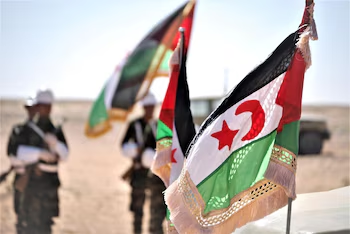
Polisario’s Call for Negotiations with Morocco: A Lack of Official Invitations
Ongoing Diplomatic Stalemate
Sidi Mohamed Omar, the representative of the Polisario Front to the United Nations, recently revealed troubling news regarding the potential resumption of negotiations with Morocco. During an interview with the Algerian state news agency APS, Omar indicated that the Polisario Front has not received any “official invitation” from the UN to restart dialogue with Morocco. This statement surfaces amidst ongoing tensions and a contentious political backdrop concerning the future of Western Sahara.
UN Involvement and Purpose of Negotiations
According to Omar, UN Secretary-General António Guterres has informed the Polisario leader, Brahim Ghali, that his special envoy for Western Sahara, Staffan de Mistura, aims to maintain communication with both parties. The goal is to foster negotiations “without preconditions.” However, the absence of an official invitation has raised doubts about the likelihood of moving forward.
The Foreign Affairs of Morocco has promoted its autonomy plan as a viable solution to the Western Sahara dispute. Conversely, the Polisario Front rejects this proposal, insisting on the necessity of a self-determination referendum to honor the wishes of the Sahrawi people.
Recent Developments in the UN Security Council
The UN Security Council recently extended the mandate of the United Nations Mission for the Referendum in Western Sahara (MINURSO) for another year. This resolution, which garnered support from the United States, aligns with Morocco’s autonomy approach, further complicating the dialogue landscape. Omar emphasized that the resolution was a reaffirmation of backing for genuine negotiations aimed at securing the Sahrawi people’s inalienable right to self-determination and independence.
Historical Context of the Conflict
The roots of the Western Sahara conflict stretch back to 1975 when Morocco occupied the region following Spain’s withdrawal. The situation escalated into an armed conflict that lasted until 1991, when a ceasefire was established in anticipation of a self-determination referendum, overseen by the UN. Unfortunately, disagreements regarding the census and the inclusion of Moroccan settlers have hindered the process.
In November 2020, the Polisario Front declared that it considered the ceasefire with Morocco broken. This decision was a reaction to a Moroccan military operation against Sahrawi activists, viewed by the Polisario as a violation of the longstanding ceasefire agreement, rekindling hostilities in the region.
Loss of Diplomatic Support
In recent years, the Polisario Front has witnessed a decline in diplomatic backing internationally. Even traditional supporters like the Spanish government have shifted their stance to align more closely with Morocco’s autonomy proposal. The Sahrawi Arab Democratic Republic (SADR), established by the Polisario, continues to reject this Moroccan plan and advocates for the complete decolonization of Western Sahara.
The Road Ahead
Omar’s assertions highlight a significant dilemma regarding the future of negotiations and the apparent lack of concrete progress. The growing international endorsement of Morocco’s autonomy plan raises questions about its legality and compliance with UN resolutions. Despite the approval of MINURSO’s mandate extension and ongoing dialogue attempts under De Mistura’s supervision, the quest for resolution seems stalled with no clear timeline or formal invitations for negotiations.
As discussions continue, the fate of the Sahrawi people’s self-determination remains precarious, calling for renewed international attention to facilitate meaningful dialogue between the Polisario Front and Morocco.