
The Aneto Glacier: Spain’s Largest Glacier Faces Irreversible Decline
While not widely recognized, Spain is home to the Aneto Glacier, nestled in the Pyrenees. Unfortunately, alarming news regarding its future has emerged. The glacier, once considered a powerful symbol of the region, is disappearing at an unprecedented pace, now showing signs of fragmentation.
A Harsh Reality Unveiled
Despite the views of seasoned mountaineers, the current state of the Aneto Glacier is starkly different from the past. Comprehensive studies using LiDAR technology, drone photogrammetry, and satellite imagery confirm that the glacier has entered a phase of irreversible collapse. What once was a solid ice mass flowing seamlessly down the slopes has transformed into fragmented remnants, resembling an archipelago of fossil ice.
Disturbing Statistics of Loss
Recent data highlights the gravity of this situation. Ice masses in the Pyrenees have lost more than a meter in thickness on average within a year, with some areas experiencing losses of up to four meters—akin to losing the height of one and a half floors of a building. Such drastic changes occurred within just months, even during a year that lacked extreme weather events like those seen in 2022. This staggering loss signals a failing system that can no longer withstand climate fluctuations.
Evolution of the Glacier’s Structure
If we examine the glacier’s evolution, we note that the Aneto has recently divided into three separate ice masses. This segmentation fundamentally alters its classification, as the smallest section beneath the Collado de Coronas may no longer retain the description of a glacier. Historical records show that since the end of the Little Ice Age in the mid-19th century, temperatures around Aneto rose by approximately 1.14°C, with a marked acceleration of decline noted since the 1980s.
Advanced Monitoring Techniques
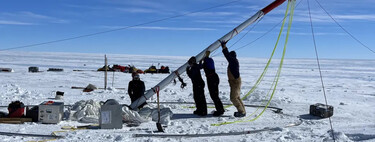
The contemporary approach to monitoring the Aneto Glacier stands apart from earlier methods. The Cryopyr team employs cutting-edge techniques, utilizing LiDAR and drone flights to craft digital terrain models, which provide unparalleled precision. Recent studies, cited in prestigious publications such as The Cryosphere and Nature, inform us not only about surface changes but reveal what lies beneath the ice prior to melting. Alarmingly, the glacier has ceased its movement due to significant loss of thickness, halting the natural flow caused by gravity. Instead, it is evolving into stagnant, fossil ice that further accelerates its melting due to increased absorption of solar radiation.
The Ossoue Glacier: A Troubling Indicator
While Aneto serves as a primary focal point, the Ossoue Glacier, located at the border of Spain and France, offers additional insight into this crisis. This glacier has experienced even more severe losses, averaging 3.5 meters in thickness. The history surrounding Ossoue serves as a grim visual reminder of the crisis at hand; caves once excavated for celebrations have now become unreachable voids towering high above the modern ice level.
The Future Landscape Post-Melting
As we ponder the question of what will remain once these glaciers fully evaporate, emerging lakes in mountainous areas are expected. An example is the Innominate Lake, formed in 2015, which now occupies the former place of a glacial giant. While these lakes might appear picturesque, they symbolize the significant ecological loss tied to climate change.
An Urgent Deadline Approaches
With current temperature and precipitation trends, experts warn that all Pyrenean glaciers may vanish within the next decade. The loss of such natural wonders holds profound implications not just for local ecosystems but for global climate patterns as well.
Understanding the Impacts
The decline of Spain’s Aneto Glacier serves as a poignant reminder of the broader ongoing climate crisis affecting glacial landscapes worldwide. Stakeholders must rally for immediate action to combat climate change and preserve what little remains of these majestic natural structures.