
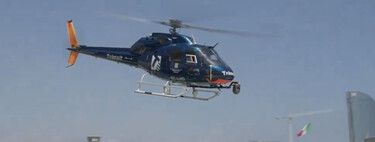
Since their inception in 2013, Pegasus helicopters have become a pivotal tool for the Spanish General Directorate of Traffic (DGT) in monitoring road safety. Their capability extends beyond simple speed checks; these helicopters can identify unsafe driving behaviors such as using a mobile phone or failing to wear a seatbelt. However, due to maintenance and contractual issues, the fleet of nine Pegasus helicopters was grounded for nearly two months.
The Return of Pegasus
From September 1 to October 25, the Pegasus helicopters were out of service due to an expired maintenance contract. The lack of interested companies to assume this role resulted in prolonged inactivity. Fortunately, an agreement was recently reached to renew their maintenance and enhance their recording systems.
With this new arrangement, the DGT aims to significantly increase their annual flight hours from 2,750 to 5,500. This escalation in operations is already showing results, as the helicopters have resumed catching speed offenders who treat the highways like racing circuits.
The Financial Investment
It comes with a hefty price tag of 51 million euros allocated for road monitoring until 2028, which could rise to 80 million if the contract is extended. The investment underscores the importance of efficient road safety management in Spain.
How Pegasus Operates
The Pegasus fleet comprises Eurocopter AS-355 Ecureuil 2 and AS 350 helicopters, equipped with advanced MX-15 radar systems capable of spotting speeding vehicles from as high as 300 meters and up to a kilometer away.
- GPS Positioning: Each helicopter has precise GPS coordinates for accurate tracking.
- Laser Rangefinder: This technology measures distances and captures the vehicle’s location every three seconds.
- Average Speed Calculation: The system calculates the average speed of each vehicle in real-time.
- Electronic Fines: If a violation is detected, recording starts, and the fine is dispatched electronically.
Despite some shortcomings, such as struggles with license plate clarity in adverse weather conditions or at night, the DGT has plans for a technological update to improve these critical aspects of their operations.
Impact of Resuming Operations
The resumption of Pegasus operations has not gone unnoticed. For example, on November 1, a driver was captured traveling at 217 kilometers per hour without a seatbelt on a highway in Malaga, resulting in fines totaling 800 euros. Such incidents are becoming more frequent as the Pegasus helicopters reestablish their presence in the skies.
Catching Speedsters
The investment and upgrades signify a renewed commitment towards safer roads in Spain. The DGT’s use of high-tech surveillance measures aims to deter reckless driving behaviors. Still, the simplest way for drivers to avoid getting caught is by adhering to traffic regulations and using common sense on the road.
Images from DGT Magazine show the innovative technologies being employed to enhance traffic monitoring, signifying Spain’s dedication to road safety.