
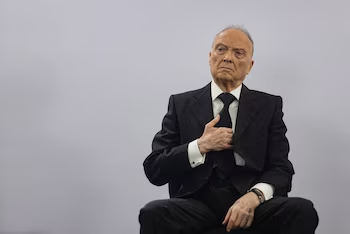
When Does Alejandro Gertz Manero’s Term End?
Alejandro Gertz Manero has been serving as the Attorney General of the Republic since 2019. His term is set for a duration of nine years, concluding in 2028. However, recent rumors of his potential resignation have prompted discussions about the future leadership of the Federal Attorney General’s Office (FGR).
Resignation Rumors and Senate Reactions
Although no official resignation document has yet been made public, the Senate of the Republic held a session to prepare for the possible routing of a replacement should a resignation occur. The Political Coordination Board (Jucopo) convened, chaired by Adam Augusto Lopez, to deliberate on the steps to be taken in the event of Gertz Manero’s resignation.
While the Senate opened its ordinary session, no concrete information regarding his resignation was available at that time. The absence of official communication from the Attorney General’s Office regarding Gertz Manero’s future raises questions about his intentions, especially since he has previously claimed he would serve out his full term.
Process for Electing the Head of the FGR
In the context of a potential resignation, the procedure for appointing a new Attorney General is governed by Mexican law. The Senate is responsible for accepting resignations, particularly if deemed due to serious causes. It is also tasked with initiating the selection process for a replacement.
Appointment Requirements
To qualify for the position of Attorney General, candidates must meet several criteria:
- Be a Mexican citizen by birth
- Be at least 35 years old at the time of appointment
- Hold a professional degree in law for a minimum of ten years
- Maintain a good reputation and not have a criminal record for intentional crimes
These stringent requirements aim to ensure that only qualified individuals can assume this critical position.
Steps for Selecting a Replacement
In the event of the Attorney General’s definitive absence, the Senate must follow a series of steps:
- The Senate has twenty days to compile a list of at least ten candidates.
- This list requires approval by a two-thirds majority of senators present and must be submitted to the Federal Executive.
- If the Senate fails to meet this deadline, the Executive may propose a shortlist directly and can provisionally appoint an Attorney General until a final decision is made.
- Upon receiving the list of candidates from the Senate, the Executive has ten days to submit a shortlist back to the Senate.
- The Senate must then choose the new Attorney General from this shortlist, requiring a two-thirds vote for approval.
If neither the Executive nor the Senate meets the timelines specified, the Executive has the authority to appoint the Attorney General directly from the candidates provided.
Conclusion
Alejandro Gertz Manero’s term as Attorney General is slated to continue until 2028, barring any unforeseen resignations. Should such a change occur, the Senate will play a critical role in determining the next head of the FGR, following a structured and legally mandated process designed to uphold the integrity and legitimacy of this vital office. The outcome of these developments remains to be seen, particularly in light of the speculation surrounding Gertz Manero’s tenure.