
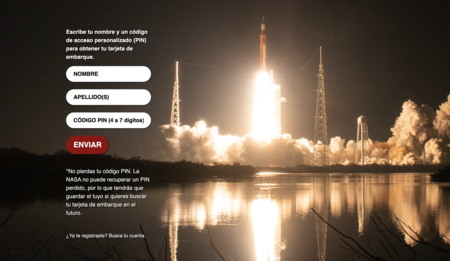
Your name could soon make an epic journey around the Moon, thanks to NASA’s exciting opportunity to register for Artemis II, the first manned mission of the Artemis program. Your name will be stored on a memory card inside the Orion spacecraft, which will orbit the Moon before returning to Earth. However, this initiative is much more than a simple gesture; it’s part of a long-standing tradition of public engagement in space exploration.
How to Participate
Joining this initiative is remarkably straightforward. NASA doesn’t require users to register or create an account. Instead, you simply need to provide three basic details on the official website. The system will generate a personalized digital pass associated with your name. Be mindful that you’ll receive a unique PIN that serves as the only means to access your pass; the agency has cautioned that this PIN cannot be recovered if lost. The names collected will be compiled onto a digital medium that will travel aboard the Orion spacecraft, symbolically becoming part of the lunar mission.
A Tradition of Human Connection
NASA’s efforts to include the public in its missions have deep roots. The Voyager Golden Record, created in 1977 under Carl Sagan’s direction, was designed to encapsulate sounds, greetings, and images representing life on Earth. Subsequent missions, like Cassini and Stardust, also incorporated public engagement, allowing people to send their names and signatures on various data mediums. Artemis II continues this legacy with a modern digital memory card, reminiscent of everyday technology.
The Role of Public Engagement
Such initiatives go far beyond mere symbolism. NASA operates on public funds and must demonstrate that projects like Artemis are valuable, extending beyond scientific merit. By inviting citizens to engage, NASA seeks to maintain public support, especially as space missions can extend over decades and require continuous financial backing. When families, schools, and enthusiasts share their symbolic boarding passes, they illuminate space exploration’s ongoing social, cultural, and political significance.
The Lessons of Apollo
The Apollo missions serve as an instructive contrast. While they achieved astonishing milestones, they also experienced a decline in public interest after the excitement of the first Moon landing. This diminishing attention led to reduced funding and, ultimately, layoffs for NASA employees in the 1970s. The Apollo program triumphed in the space race but lost something equally crucial: sustained societal engagement.
The Current Climate of Space Exploration
Artemis faces a distinct context compared to Apollo. Today, not only are technological challenges present, but strategic ones as well. Currently, Artemis II is scheduled for a launch window between February and April 2026, amidst growing competition from countries like China that are actively developing their own lunar programs. As such, maintaining public interest and support becomes indispensable in this new era of space exploration.
Beyond the Journey
Registering your name for Artemis II may not influence the course of a mission directly, but it serves a larger purpose. It affirms that space exploration is an endeavor that belongs to the public, not just those in control centers. The Artemis program aims not only to return humans to the Moon but to forge a collective narrative about exploration’s intent and inclusivity. This initiative may inspire a new generation, encouraging them to look upward at the stars and dream.