
Doom on Unexpected Hardware: The Ticket Printer Challenge
Doom has made a name for itself as one of the most ported games in history, running on devices ranging from Texas Instruments calculators to pregnancy tests and even the Touch Bar of a MacBook. The gaming community continually pushes the boundaries of what’s possible, proving that if a device has a screen and processor, there’s a user willing to bring Doom to life. This enthusiasm culminates in a new frontier: running Doom on a ticket printer. Yes, you read that right—a humble ticket printer.
The Philosophical Aspect of Running Doom
More than a simple technical feat, this challenge raises intriguing philosophical questions. It’s not merely about whether Doom can run—it’s about whether we can repurpose devices intended for specific functions into unexpected gaming platforms. The transformation of mundane technology into something extraordinary propels this age-old question: “What if you can execute it?”
A Printer with the Heart of a Computer
The ticket printer in question was featured by Bringus Studios. This isn’t your average printer. Designed for small businesses, it doubles as a point-of-sale terminal, boasting an embedded operating system, USB ports, and Windows 7 Pro Embedded functionality. Its robust structure reveals hidden features like SATA cables and internal USB ports, making it less a peripheral accessory and more a complete, concealed computer.
Playing Doom on a Paper Screen
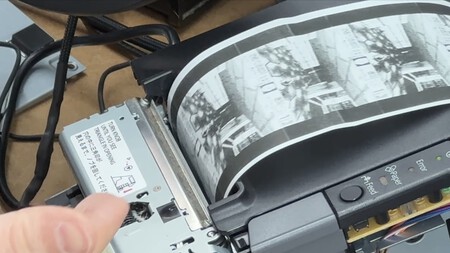
Once the creator realized that this ticket printer functioned like a full-fledged computer, running Doom became a tantalizing possibility. Through software rendering techniques, they adapted the game’s visuals for thermal printing, effectively transforming physical sheets of paper into a retro gaming display. Though the result lacked comfort and efficiency, the ingenuity was unmistakable.
Thermal Challenges: Too Hot to Play
Although the setup was functional, the printer struggled with extended gameplay sessions. Intense scenes caused the thermal print head to overheat, leading to gibberish output and print pauses. An external fan extended the gameplay duration, yet as the paper piled up, players needed to rely on intuition due to unpredictable visuals.
Documenting Gaming History
The experiment didn’t stop at Doom; it ventured into Half-Life territory. The game’s stylistic visuals seemed more compatible with thermal printing, yielding clearer images that players wanted to save. Iconic moments, like the lab microwave explosion, were converted to printed frames. Even with a lag, the scenes remained recognizable, morphing into a form of documentation rather than mere gameplay.

A Reminder of Innovation
This ticket printer experiment serves as an inspiring reminder of why such challenges captivate tech enthusiasts. The impracticality and illegibility of the results become secondary to the fact that it was accomplished at all. The game was played, the images were printed, and a once-humble device evolved from a mere tool into an extraordinary platform for creativity and innovation.
Images | Bringus Studios